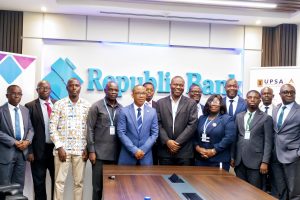
Traditional leaders have shared their perspectives on widowhood rites, taboos and festivals as part of the Cultural Practices in Ghana Project at the University of Professional Studies, Accra (UPSA). The discussions, held on Friday 28 August, 2026, explored the relevance of these practices to Ghana’s cultural identity, national development and contemporary society.
Prof. Alexander D. K. Preko, Director of the Research and Consultancy Centre and Lead Researcher on the project, led the conversations with Nene Tetteh Amoh Oblejima IV of Okper-Manam in the Yilo Krobo Traditional Area; Nii Amarh Ashiboye, Head of the Nii Ashitey Papaatse We Clan in the Tema Traditional Area; and Nana Yadae Kojo IV, Chief of Mpintsin and Gyaasehen of Sekondi.
He was supported by Dr Joseph Gerald Nyanyofio, Acting Director of the Otumfuo Centre for Traditional Leadership at UPSA and First Co-Researcher on the project.
The nationwide study is being undertaken on behalf of the Otumfuo Centre for Traditional Leadership, in collaboration with the Ghana Statistical Service and with funding from the United Nations Population Fund (UNFPA). It covers all 16 regions of Ghana.
Cultural practices provide a link between generations, shaping communal identity, social relationships and the transmission of values. Examining widowhood rites, taboos and festivals requires sensitivity to their historical significance and the experiences of those who observe them, while recognising that their meanings and forms may differ across communities.
The engagements document traditional leaders’ knowledge and experiences to inform an examination of cultural practices that should be preserved, adapted or reconsidered in response to changing social conditions. Their perspectives form part of the project’s effort to understand the place of these practices in contemporary Ghana.
Within this context, dialogue between researchers and traditional leaders offers an opportunity to consider how cultural continuity can respond to changing societal expectations. Documenting these perspectives can enrich academic understanding and support informed public discussion on preserving cultural heritage while respecting individual dignity and community wellbeing.