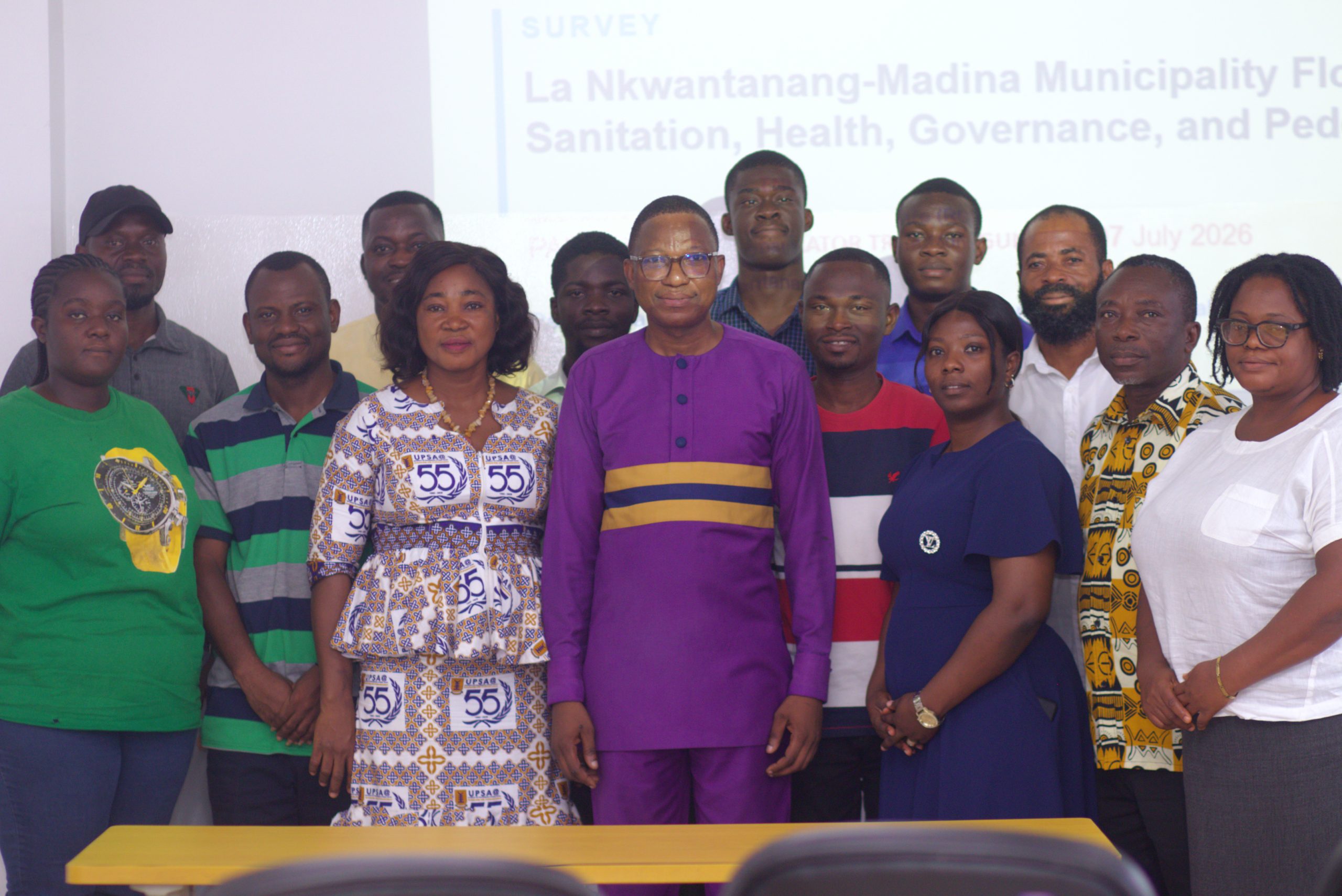
The Research and Consultancy Centre (RCC) of the University of Professional Studies, Accra has trained 20 enumerators to support a field survey aimed at assessing key development challenges in the La Nkwantanang-Madina Municipality.
The training, held on Tuesday, July 7, 2026, equipped the recruited personnel with the knowledge and practical skills required for a 10-day field data collection exercise focusing on flooding, sanitation, health, governance, development needs, and pedestrian safety within the municipality.
Facilitating the training, Dr Timothy King Avordeh explained that the survey seeks to collect primary data from residents and key stakeholders to better understand the municipality’s development challenges and inform evidence-based interventions.
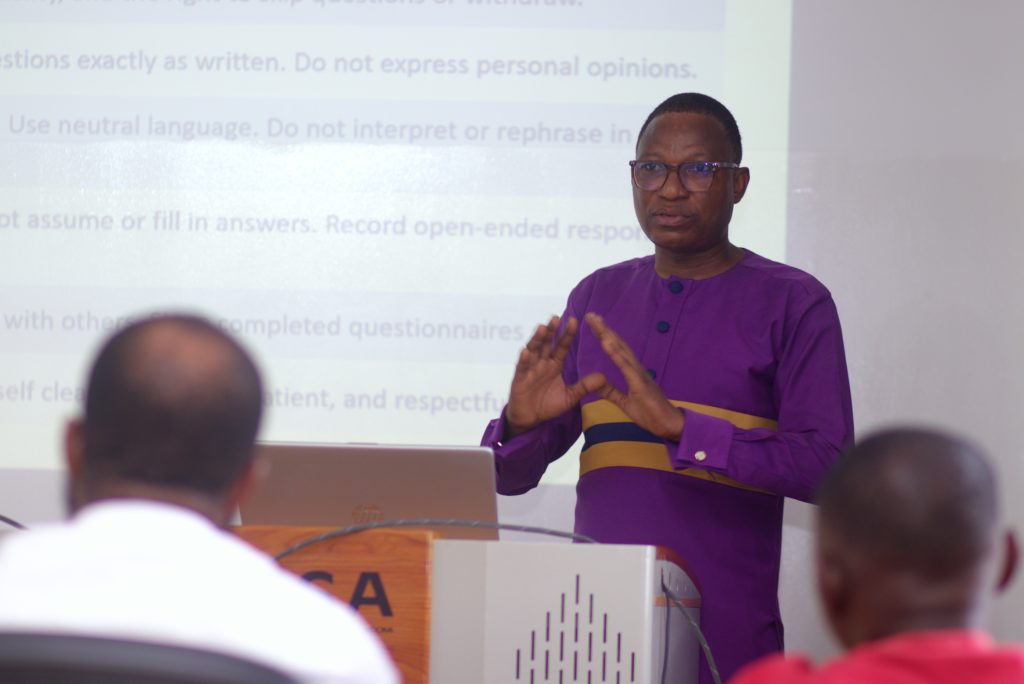
He noted that the study will gather information on the effects of flooding, sanitation conditions, health impacts, governance issues, development priorities, and pedestrian safety from communities across the municipality including Madina, Pantang, Teiman, Oyarifa, Danfa and Otinibi.
According to Dr Avordeh, the quality of the findings will depend largely on the professionalism and commitment of the enumerators during the data collection exercise.
He therefore urged participants to uphold the highest standards of accuracy, objectivity, and ethical conduct throughout the fieldwork.
The training focused on the proper administration of survey questionnaires, ethical considerations in research, effective engagement with respondents, and best practices for collecting reliable and high-quality data.
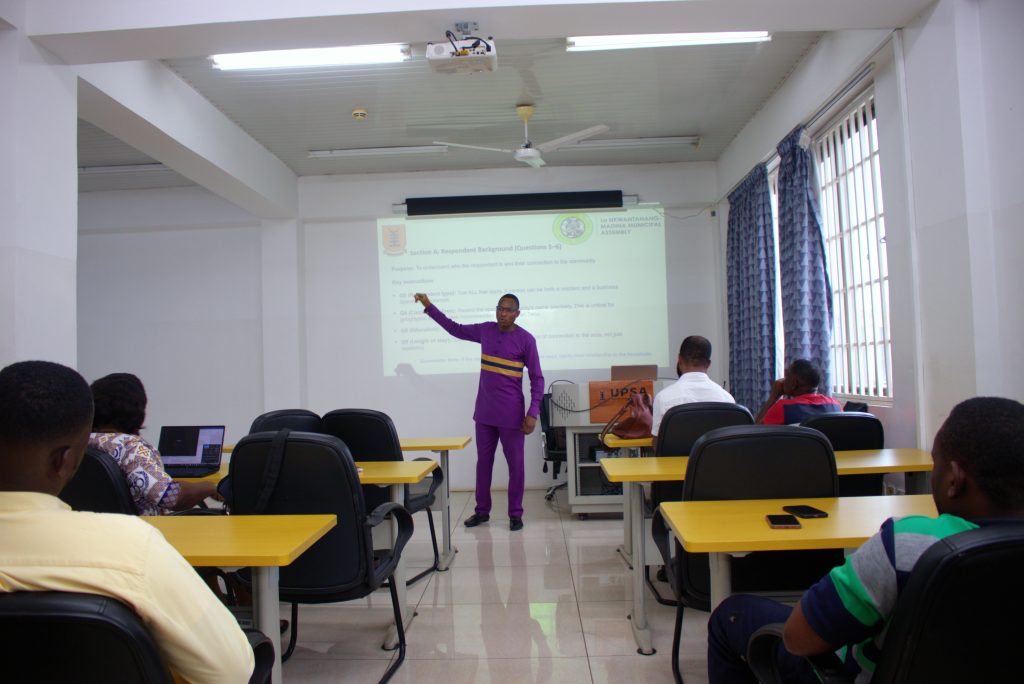
Participants were also taken through the survey instruments and field protocols to ensure consistency in data collection during the 10-day exercise.
The survey will engage a broad cross-section of respondents, including residents comprising tenants and landlords or landladies, market workers, transport operators, business owners, institutional representatives, and other community stakeholders.
The findings are expected to provide valuable evidence to support planning and decision-making aimed at addressing flooding, improving sanitation and public health, strengthening local governance, enhancing pedestrian safety, and promoting sustainable development within the La Nkwantanang-Madina Municipality.