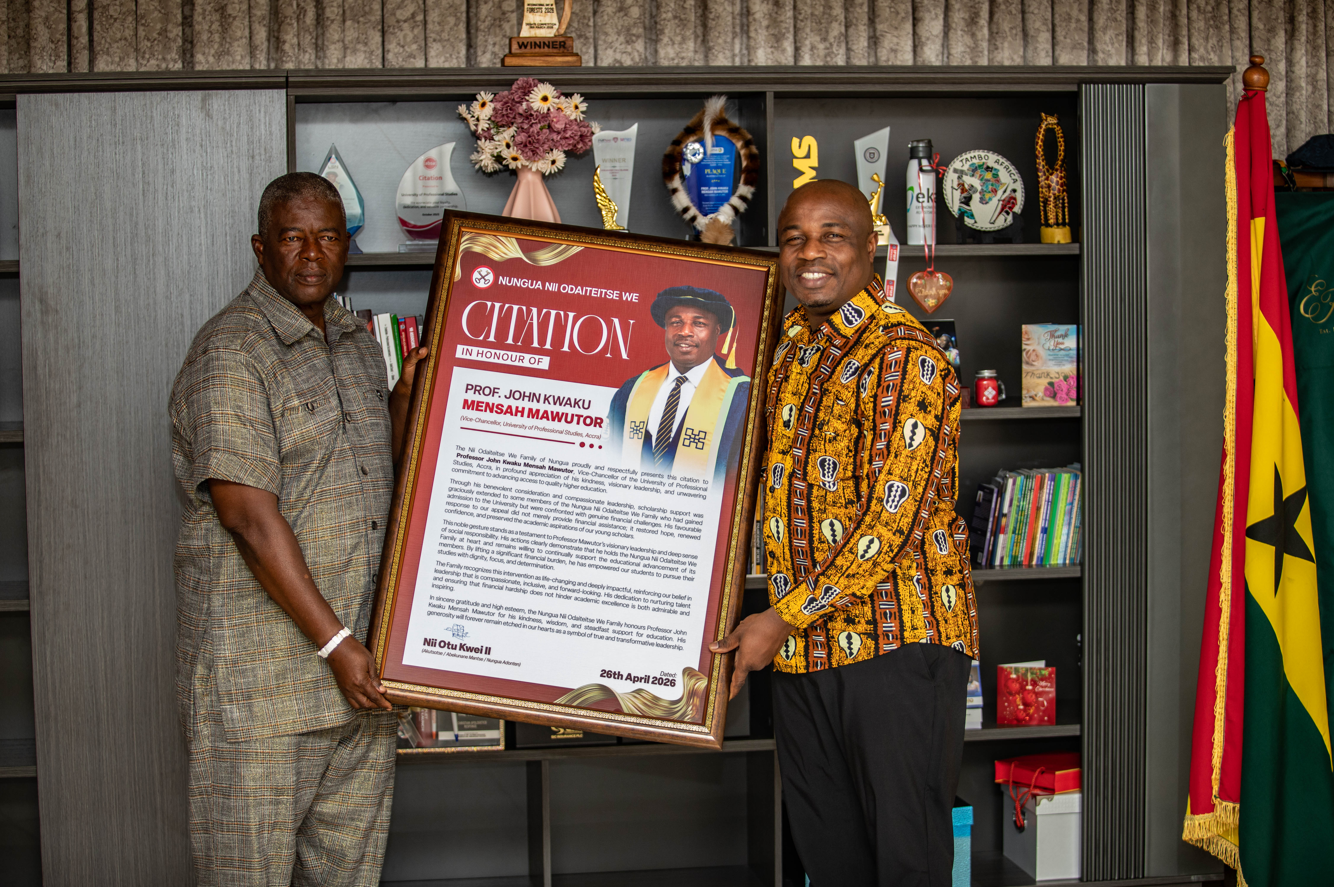
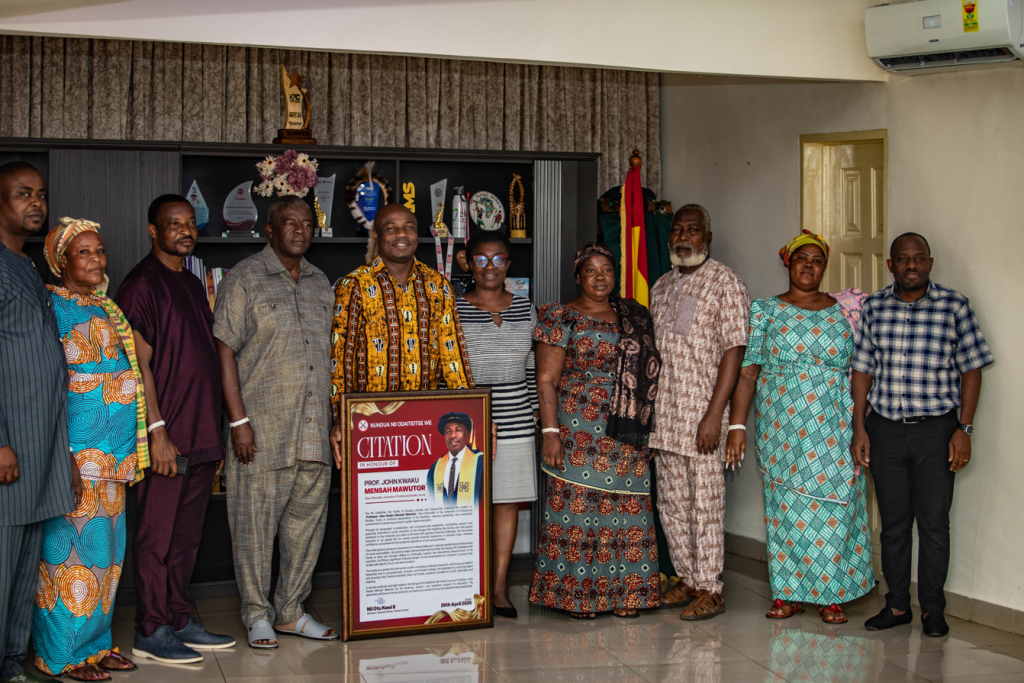
The Nungua Nii Odaiteitse We Family has honoured the Vice-Chancellor of the University of Professional Studies, Accra (UPSA), Professor John Kwaku Mensah Mawutor, for his contribution to expanding access to higher education for deserving students from the Nungua community. The honour was conferred on Wednesday, 29 April 2026, during a courtesy visit to the Vice-Chancellor by a delegation led by Nii Otu Kwei II, Akutsotse and Nungua Adonten/Abekunane Mantse.
The delegation presented a citation to Professor Mawutor in appreciation of his support for five indigenes of Nungua who had secured admission to UPSA but faced financial constraints.
The citation described the intervention as a significant act of leadership and social responsibility, noting that the scholarship support had “restored hope, renewed confidence, and preserved the academic aspirations” of the beneficiaries.
The Nungua Nii Odaiteitse We Family also expressed gratitude to the Vice-Chancellor for participating in the recent Education and Youth Empowerment Forum organised by the Odaiteitse Clan. The forum was aimed at inspiring academic excellence, personal development and responsible citizenship among young people in the community.
Receiving the delegation, Professor Mawutor thanked the family for the recognition and reaffirmed UPSA’s commitment to supporting educational advancement within its host and neighbouring communities. He announced that the University would increase the number of scholarship slots available to indigenes of Nungua from five to twenty for the 2026/2027 academic year.
The Vice-Chancellor further underscored the need for deliberate interventions to support indigenes of rapidly urbanising communities, noting that inclusive development must take account of the welfare, aspirations and future of local populations.
“As a University, we are prepared to partner with the Nungua Traditional Council and support initiatives that will secure the future of the community,” Professor Mawutor stated.
The visit highlighted the value of sustained collaboration between traditional authorities and academic institutions in promoting inclusive education, community development and social mobility.