

The University of Professional Studies, Accra (UPSA) has supported efforts to strengthen public awareness of digital security through its participation in an event marking Global Encryption Day in Ghana. Held on Tuesday, 20 October 2026, the programme focused on practical ways to protect personal information, secure digital communications and reduce exposure to online fraud.
Organised by the Internet Society Ghana Chapter under the theme “Encryption for Everyday Safety: Protecting Phones, Messages, Money, and Personal Data”, the event brought together participants from diverse backgrounds for presentations and demonstrations on everyday cybersecurity practices.
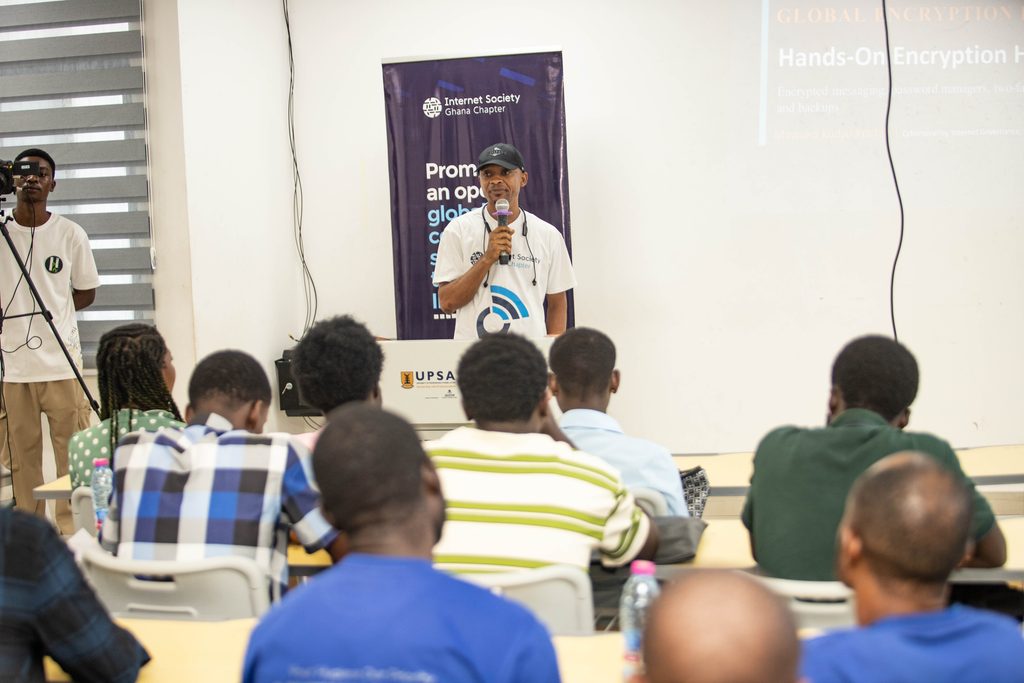
Speaking at the event, the President of the Internet Society Ghana Chapter, Dr Maud Ashong Elliot, emphasised the need to extend digital safety education beyond technology professionals to the wider public.
She described the creation of a safer digital environment as a shared responsibility, stressing that individuals need the knowledge and skills to protect themselves and help others in their communities adopt safer practices.

Leading a practical session on smartphone security, Dr Elias Ocquaye outlined five essential measures: using strong screen locks, enabling SIM card PINs, managing application permissions, installing software updates and regularly backing up data.
He explained that mobile phones have become central to financial transactions, personal communications and access to sensitive information, making device security an everyday priority. He encouraged participants to avoid predictable passwords and security codes and to take precautions against unauthorised access if their devices were lost or stolen.
Discussions also examined the role of encryption in protecting information exchanged over digital networks. Participants were cautioned that, while encryption provides an important layer of protection, it cannot address every security threat, particularly when devices are compromised or users are deceived into disclosing sensitive information.

Sessions on online fraud and mobile money safety reinforced the need to verify the legitimacy of websites and requests for information, safeguard authentication details and exercise caution when responding to suspicious messages or calls.
The programme highlighted the relationship between technical safeguards and informed user behaviour in protecting individuals, businesses and communities from digital threats. UPSA’s participation underscored the relevance of academic engagement and public education in helping people apply digital security knowledge to their daily lives.