
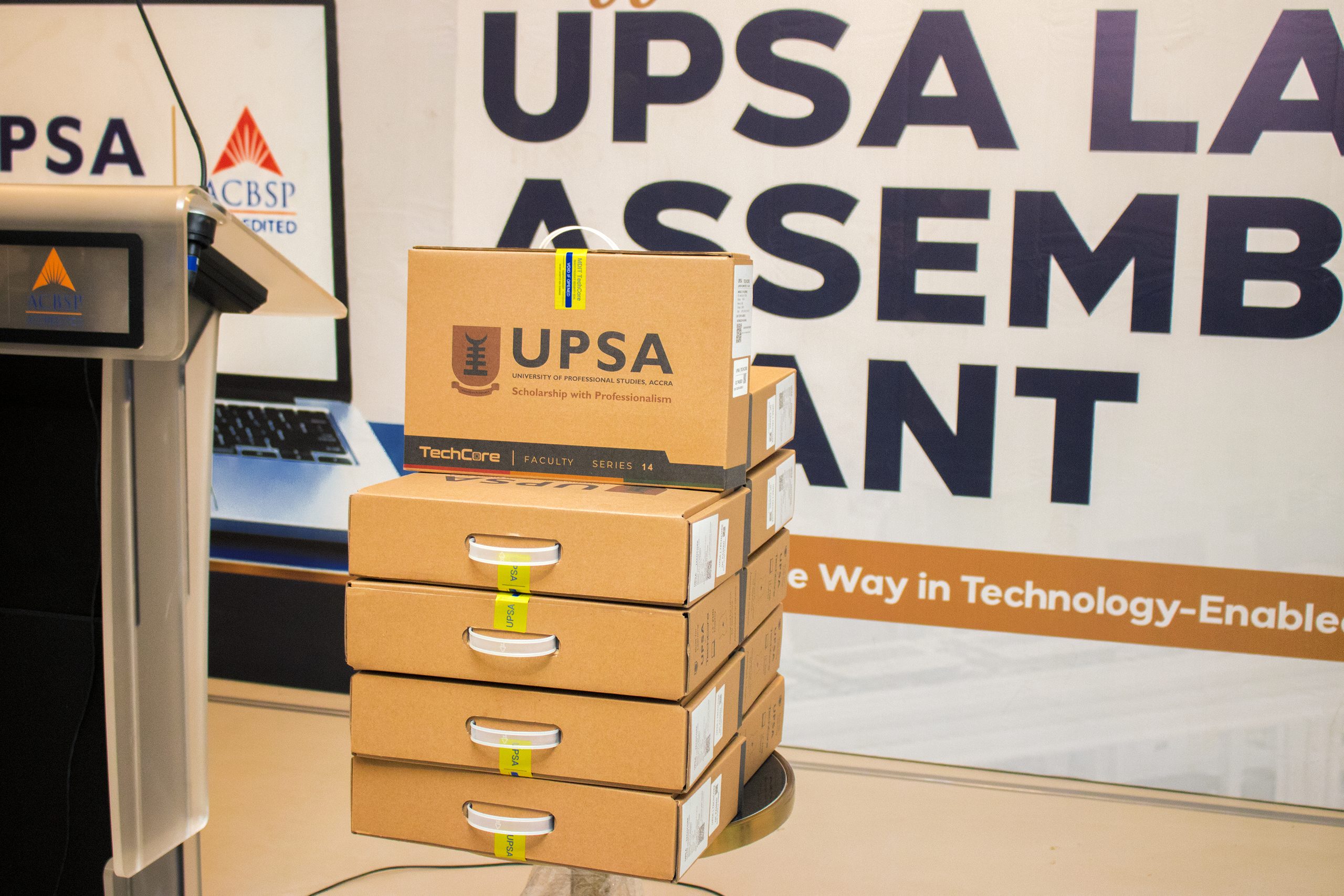
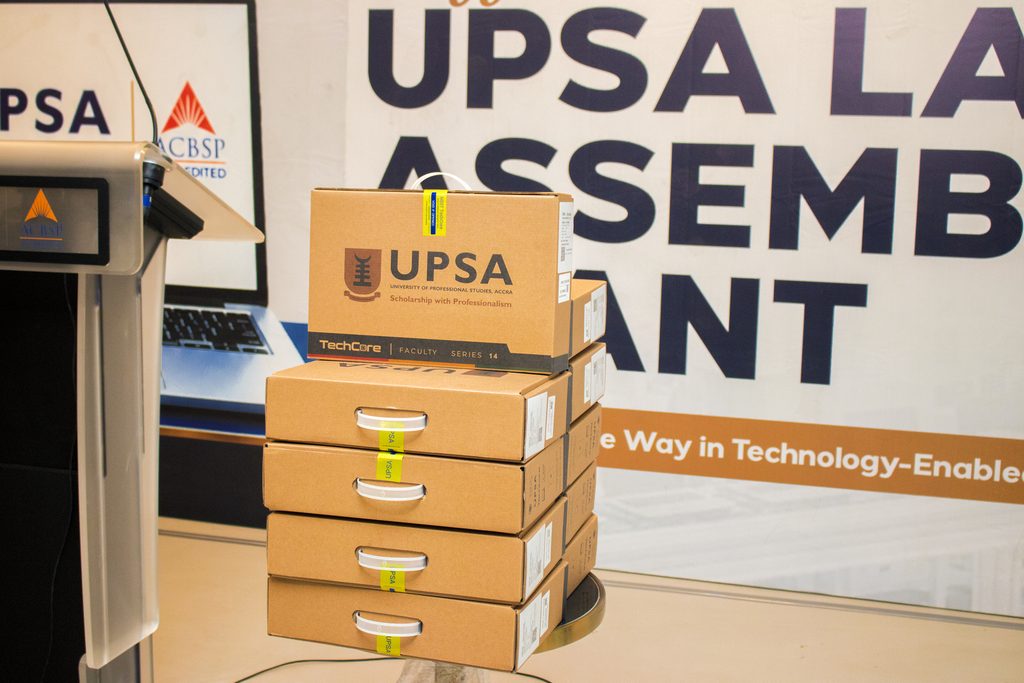
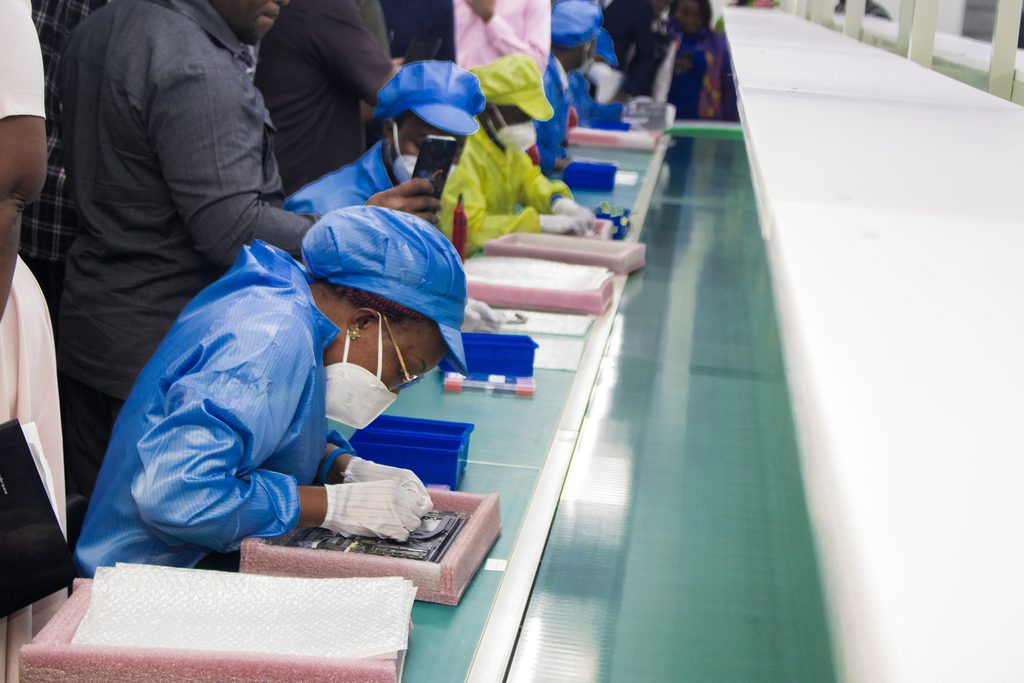
The University of Professional Studies, Accra (UPSA) has launched a laptop assembly plant to strengthen practical technology training and support local production of computing devices. Launched on Wednesday, 14 October 2026, the facility will serve as both a production centre and a training platform, offering students hands-on experience in laptop assembly, maintenance and repair.
Speaking at the launch, the Vice-Chancellor, Prof. John Kwaku Mensah Mawutor, said the initiative reflected the University’s commitment to professional education that combines academic knowledge with practical skills, innovative thinking and problem-solving.
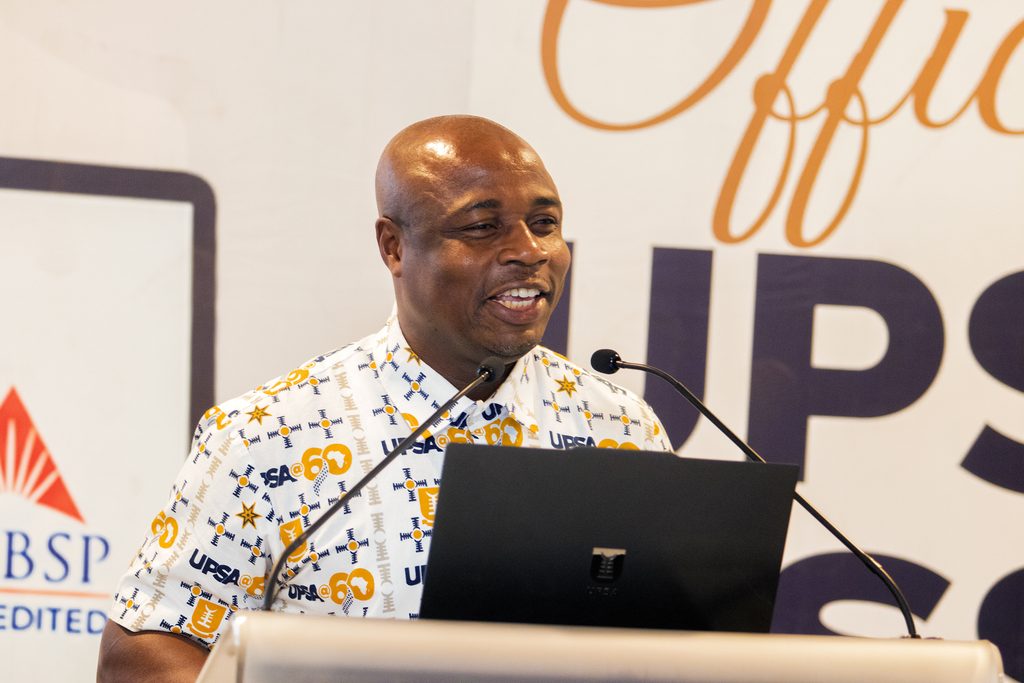
He explained that the plant formed part of his vision to integrate technology into teaching and learning while encouraging collaboration across academic disciplines. It would provide opportunities for students to develop technical competencies and apply their knowledge to practical challenges.
Prof. Mawutor said the facility had a production capacity of 1,000 laptops per week, with plans to commercialise its operations and progressively increase the use of locally produced components.
“This is a dream that will go beyond our campus. We want to commercialise the initiative, and it is my prayer that we will start producing 30 per cent of the components locally within the next three years,” he said.
He added that the longer-term ambition was to expand local participation in the technology value chain through skills transfer, innovation and the development of technical capacity.
The Acting Chief Executive Officer of Mind Dey Talent and IT Co. Ltd, the project’s technical partner, Mr Jimmy Wilson Owusu, highlighted the facility’s educational purpose.
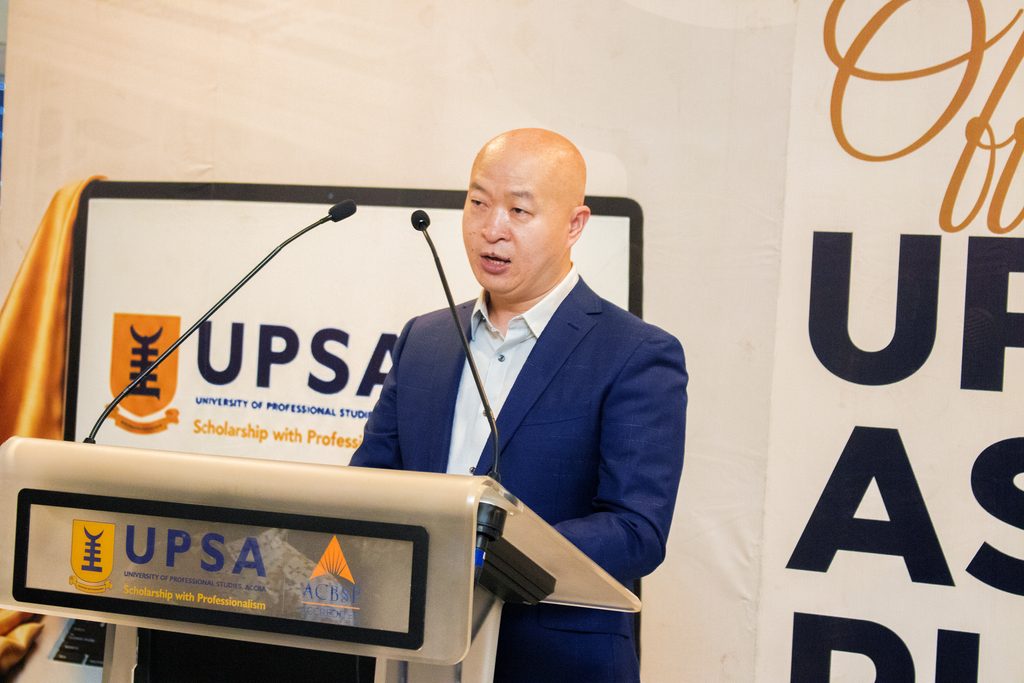
“What we are seeing today is more than a laptop assembly plant. We are creating opportunities for students to gain first-hand experience in laptop assembly and related technical processes,” he said.
Mr Owusu explained that the initiative would help students translate their understanding of technology into practical capabilities in computer design, assembly, repair and maintenance.
The Chairman of the UPSA Governing Council, Dr Harry Lawson Agbanu, described the project as an expression of the University’s commitment to practical education, innovation and industry-relevant competencies. He stressed that sustainable technological development required institutions to strengthen their capacity to produce, assemble and develop equipment locally.
The Municipal Chief Executive for the La Nkwantanang-Madina Municipal Assembly (LaNMMA), Hon. Ibrahim Faila Fuseini, welcomed the University’s investment in technology and skills development.
He noted that the facility presented opportunities for collaboration between UPSA and the Municipal Assembly to advance technological innovation and practical training. He added that the initiative reinforced the University’s efforts to integrate technology into professional education.