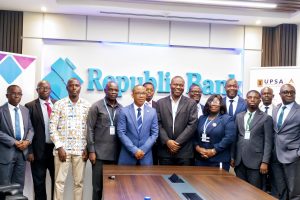

The Vice-Chancellor of the University of Professional Studies, Accra (UPSA), Prof Kwaku Mensah John Mawutor, has underscored the growing importance of Environmental, Social and Governance (ESG) principles and sustainability in shaping Africa’s participation in global trade and economic transformation.
He made the remarks at the opening ceremony of the 11th International Conference on Business Management and Entrepreneurial Development (ICBMED), held on Monday, May 25, 2026, at the Kofi Ohene-Konadu Auditorium of UPSA.
The two-day conference themed “ESG & Sustainability in Focus: What does it mean for Africa and Global Trade?” brought together academics, researchers, students, policymakers, sustainability practitioners and industry players from across the world to deliberate on the implications of ESG and sustainability for Africa’s development and participation in global trade.

Welcoming the participants, Prof Mawutor said the ICBMED conference series had not only elevated the academic profile of UPSA but had also positioned the university as an institution that continued to shape conversations relevant to Ghana, Africa and the wider global academic community.
He noted that discussions around ESG and sustainability were no longer optional in today’s global business environment, stressing that organisations across the world were increasingly integrating sustainability considerations into their operations and strategic decisions.
“The conversation on Environmental, Social and Governance (ESG) principles and Sustainability is no longer optional. It has become one of the defining issues of our time,” Prof Mawutor stated.
He explained that investors, governments, regulators, consumers and international institutions were now demanding responsible business practices, ethical governance systems, climate accountability, social inclusion and sustainable production models.
“Today, ESG is influencing investment decisions, access to international markets, global supply chains, lending conditions, trade agreements and corporate reputation. Companies that ignore sustainability concerns are gradually losing competitiveness in the global marketplace,” he added.

Prof Mawutor further indicated that the global transition towards sustainable business practices also presented significant opportunities for African countries to reposition themselves competitively within the global economy.
He emphasised that universities must now serve as centres for sustainability research, innovation, policy development and ethical leadership training to help address emerging business and development challenges.
“Institutions of higher learning must become centres for sustainability research, innovation, policy development, ethical leadership training, and practical solutions to contemporary business challenges,” he said, reaffirming UPSA’s commitment to supporting sustainability-focused research and policy dialogue.
Delivering remarks on behalf of the Director of the Research and Consultancy Centre (RCC), Prof Rufai Haruna said the conference theme had been carefully selected to reflect the growing global relevance of ESG and sustainability issues.
He noted that the participation of scholars from different parts of the world demonstrated the conference’s commitment to promoting sustainable development and evidence-based policymaking through academic collaboration and research.

Deputy Chief Executive of the Forestry Commission and Chairperson for the event, Mr Elikem Kotoko, described ESG as a major framework through which governments, businesses and consumers increasingly assess corporate responsibility and long-term value creation.
He urged stakeholders to view ESG not as a mere compliance requirement but as a strategic driver of Africa’s economic growth and industrial transformation.
“ESG should not be seen as a compliance obligation but rather as a strategic pathway toward industrial transformation, trade competitiveness, and long-term economic resilience,” Mr. Kotoko stated.
President of the Association of African Sustainability Practitioners, Mr Humphrey Tetteh, underscored the importance of sustainability across every sector of the economy and reaffirmed the association’s commitment to promoting sustainable business practices and professional development within the continent.