
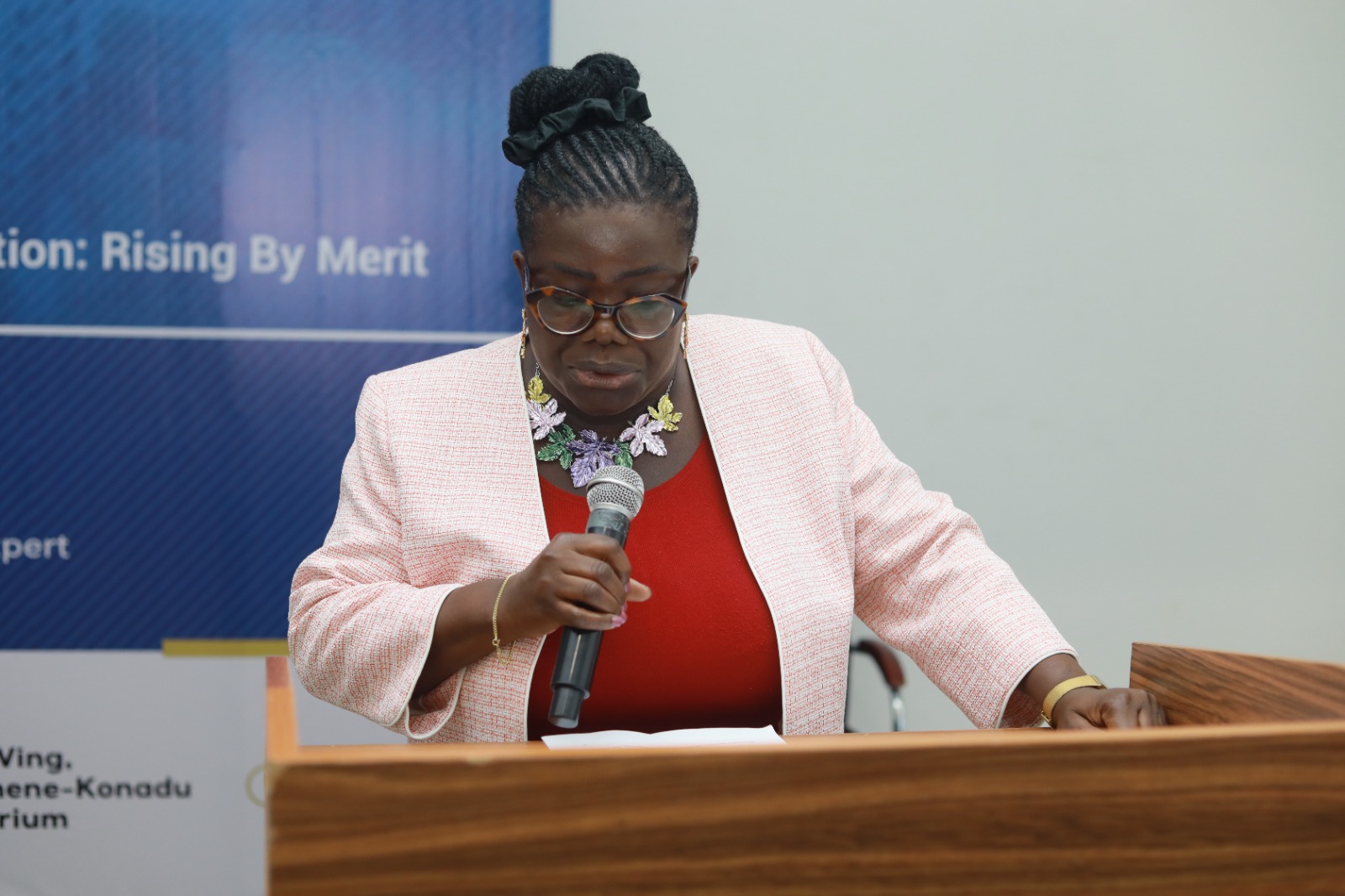
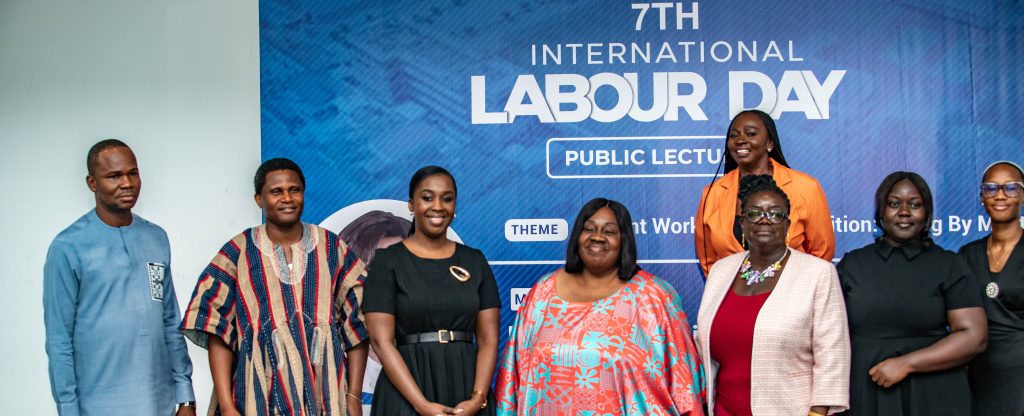
The University of Professional Studies, Accra (UPSA), through its Institute of Work, Employment and Society (IWES), hosted its 7th International Labour Day Public Lecture on Wednesday, 22 April 2026, providing a high-level platform for reflection on fairness, opportunity and the future of work in Ghana.
Held under the theme, “Decent Work, Real Recognition: Rising by Merit,” the lecture brought together voices from academia, labour and industry. Setting the tone for the engagement, Dr Mrs Erika Mamle Osae, Acting Director of IWES, said the lecture was designed to interrogate structural inequalities within the labour market and promote evidence-based dialogue on work, employment and social protection.
The event featured perspectives from academia, labour and industry. Professor Redeemer Krah of the University Teachers Association of Ghana (UPSA branch) stressed the responsibility of universities to produce graduates who are not only technically competent but also guided by ethical values and professional integrity. Dr. Abena Asomaning, Head, Sustainability and Strategic Impact Department (SSID) of Ghana Export-Import Bank underscored the need for institutions to build transparent systems that reward performance and support inclusive economic participation. Mr Joshua Ansah, Secretary-General of the Trades Union Congress, called for stronger protections for workers, especially those in the informal sector, and emphasised the need for policies that uphold dignity, safety and equitable compensation.
Delivering the keynote address, Dr Esther Ofei-Aboagye offered a far-reaching analysis of Ghana’s labour ecosystem, anchored on the interconnected ideas of decent work, recognition and merit. She described decent work as a fundamental human right and stressed the need to guarantee fair wages, safe working conditions, social protection and equal opportunities for advancement, regardless of gender, background or location.
She noted that rising living costs, inequality and widening opportunity gaps continue to shape the labour market, even as Ghana’s youthful population presents a major demographic advantage. She also identified the dominance of the informal sector, where many workers operate without formal protections, as a major barrier to decent work, while acknowledging that digital work, remote employment and entrepreneurship are creating new opportunities alongside new risks.
A central focus of her address was recognition, which she argued must no longer be treated as a discretionary reward but as an institutional responsibility. She observed that in many organisations, recognition is too often shaped by visibility, proximity to power or personal networks rather than actual performance and contribution. She therefore called for systems that are equitable, timely and inclusive, and that acknowledge both visible achievements and often overlooked contributions.
Dr Ofei-Aboagye further challenged narrow interpretations that ignore structural inequalities. She argued that a credible merit-based system must be grounded in transparency, competence and fairness, while recognising that people begin from different starting points due to social, economic and institutional barriers. She added that affirmative action is not about lowering standards, but about creating fair conditions for genuine merit to emerge.
She concluded with a call for Ghana to move away from systems shaped by patronage, entitlement and exclusion towards systems rooted in fairness, accountability and opportunity. She urged government, institutions and industry leaders to invest intentionally in structures that value workers, recognise contribution and ensure that advancement is based on merit.
The lecture reinforced UPSA’s position as a leading platform for intellectual engagement on issues of national importance. Through the keynote and the broader discussions it generated, the event delivered a clear message: Ghana’s future of work must be built on dignity, fairness and genuine opportunity for all.