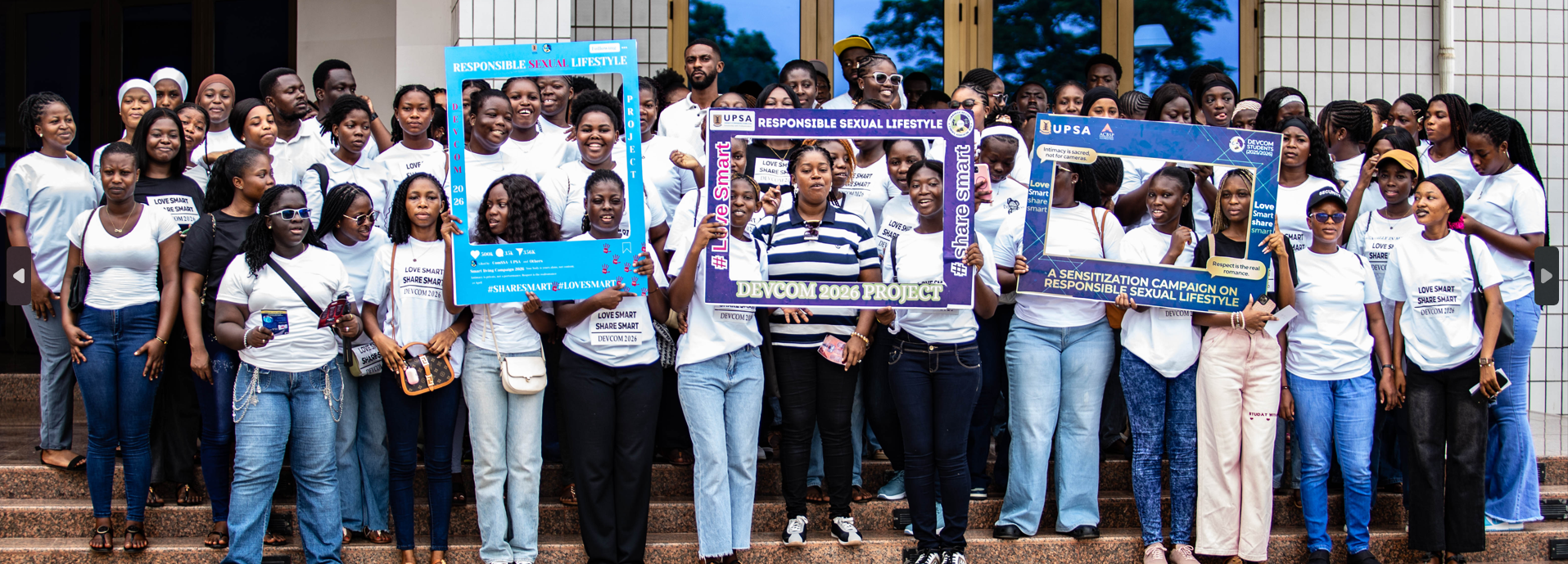
Final-year students of Public Relations Management at the University of Professional Studies, Accra (UPSA), under the Faculty of Information Technology and Communication Studies, have undertaken a high-impact sensitisation campaign aimed at promoting responsible sexual lifestyles and safer online practices among young people.
The initiative, executed as part of their Development Communication studies under the supervision of Mrs. Sandra Yeboah Nyarko, took place on Friday, 24th April 2026, under the theme “Love Smart, Share Smart: Protect Your Health, Protect Your Privacy.” The exercise reflects a practical and community-oriented approach to addressing contemporary youth challenges through strategic communication.
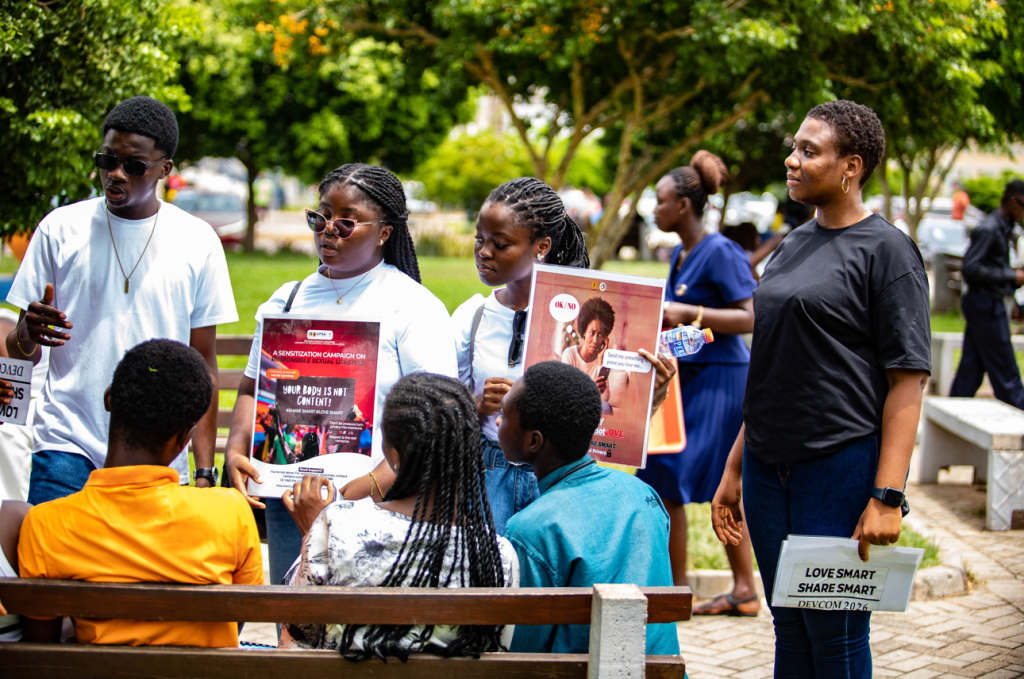
The sensitisation activities extended beyond the University campus, reaching students and residents within UPSA hostels, neighbouring communities, as well as selected institutions including Madina Estate Basic School and Ideal College. This broad outreach underscores the students’ commitment to engaging diverse audiences and driving meaningful behavioural change.
The campaign responds to growing concerns about risky online behaviour and its connection to broader social and health challenges among young people. With increased exposure to social media, peer influence, and limited access to accurate sexual health information, many young individuals remain vulnerable to sexually transmitted infections (STIs), unplanned pregnancies, cyberbullying, and the irresponsible sharing of intimate content.
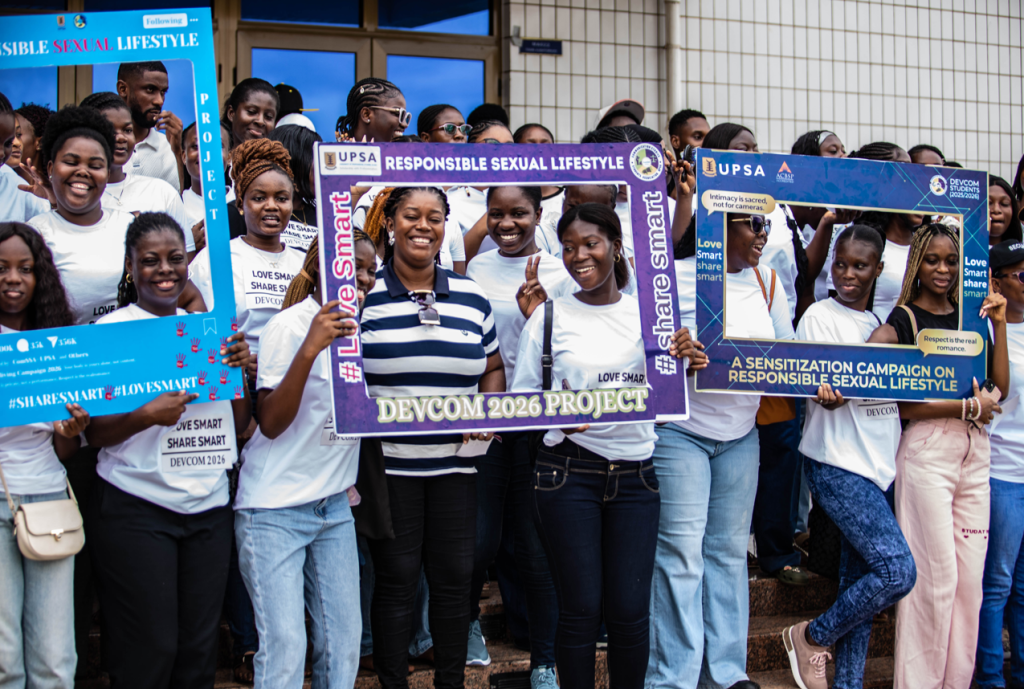
Through a series of structured workshops, seminars, and an engaging social media drive anchored on the hashtag #LoveSmartShareSmart, participants were educated on key issues including STI prevention, the importance of consent, and practical strategies for protecting personal data online. The sessions were designed to equip young people with the knowledge and tools needed to make informed and responsible decisions.
A key highlight of the initiative was its emphasis on practical behavioural change. Participants were guided to conduct “digital privacy audits,” reviewing their online presence, updating passwords, and strengthening privacy settings across social media platforms. This hands-on approach reinforced the importance of safeguarding personal information in an increasingly digital world.
In addition, the students facilitated interactive engagements within schools and communities, focusing on reproductive health education and the risks associated with sharing explicit content online. Discussions also explored the role of peer pressure and curiosity in shaping behaviour, with facilitators stressing the need for critical thinking and informed decision-making.
While the campaign primarily targeted senior high school and tertiary students, groups identified as particularly susceptible to both health risks and digital exposure, it also engaged educators, parents, and student influencers to help reinforce positive values and sustain behavioural change.
The initiative exemplifies UPSA’s commitment to blending academic learning with practical application, empowering students to develop solutions that address real-world challenges while contributing meaningfully to society.