
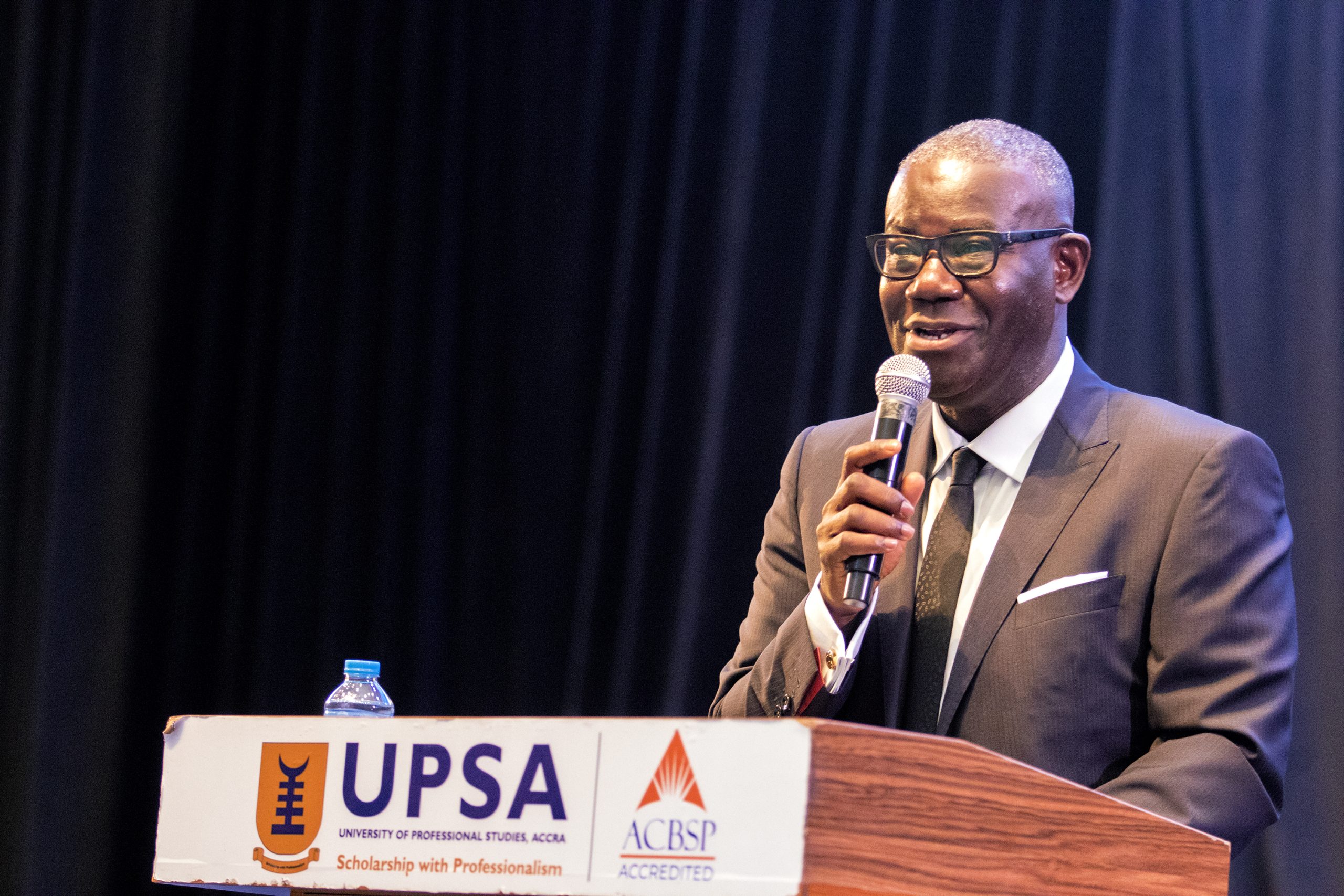
The University of Professional Studies, Accra (UPSA) Graduate School has commenced the 2026 Practitioner’s Forum with a strong emphasis on industry relevance, practical learning, and professional preparedness. Held on Friday, 17 April 2026, the opening day of the two-day forum set the tone for the concluding session on Saturday, 18 April 2026, by exposing students to the realities, expectations, and evolving demands of the modern workplace.

The forum forms part of the University’s broader commitment to deepening the relationship between academic training and professional practice, while equipping students with the skills, mindset, and resilience required to excel in a fast-changing global environment.
Addressing participants, the Acting Dean of the Graduate School, Dr Michael Mickson, described the forum as an important feature of UPSA’s academic structure and a reflection of the University’s enduring philosophy of blending scholarship with professional practice. He noted that such engagements provide students with the opportunity to connect classroom learning with lived professional experience and to better appreciate the standards expected in industry.
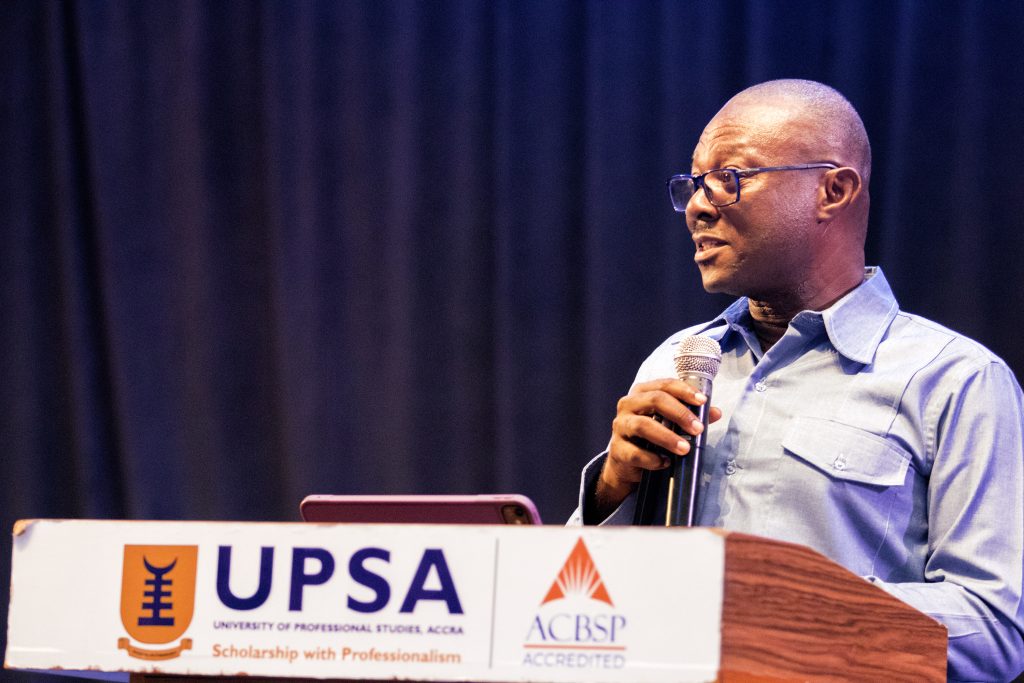
Dr Mickson encouraged students to approach the forum with seriousness and curiosity, stressing that the platform had been designed to move learning beyond theory and to expose them to insights that would shape their professional growth. He said the opening session was intended to lay a solid foundation for the second day of the forum, while reinforcing the Graduate School’s commitment to producing graduates who are both academically grounded and professionally prepared.
Speaking on behalf of the Vice-Chancellor, the Pro Vice-Chancellor, Prof. Emmanuel Selasi Asamoah, underscored the significance of the Practitioner’s Forum as a mandatory academic requirement under the Ghana Tertiary Education Commission (GTEC) accreditation guidelines. He explained that participation in the forum forms part of students’ academic assessment and contributes to the fulfilment of graduation requirements.

Prof. Asamoah urged students to take the session seriously and to make the most of the learning opportunity before them. He observed that in an increasingly competitive and rapidly evolving job market, academic qualifications alone are no longer sufficient, and that qualities such as adaptability, entrepreneurial thinking, strong communication, and problem-solving have become indispensable.
Delivering the keynote address on the first day, Mr Michael Larbie, Group Executive for Corporate and Investment Banking at Ecobank, shared practical reflections drawn from his extensive international career. He noted that rapid technological change, including the rise of artificial intelligence, together with wider global shifts, had transformed the world of work and made leadership and career development more demanding.

He stressed that while academic qualifications may create initial opportunities, sustained success depends on an individual’s ability to adapt, communicate effectively, think critically, and remain resilient. He further encouraged students to take ownership of their professional development by building strong networks, embracing continuous learning, and cultivating an entrepreneurial mindset.
The opening day of the 2026 Practitioner’s Forum offered students the valuable opportunity to engage with a distinguished industry practitioner and gain first-hand insight into the expectations and opportunities that define today’s professional environment. In doing so, it established a strong foundation for the second day of the forum on 18 April 2026 and advanced the Graduate School’s objective of preparing students for leadership and relevance beyond the classroom.