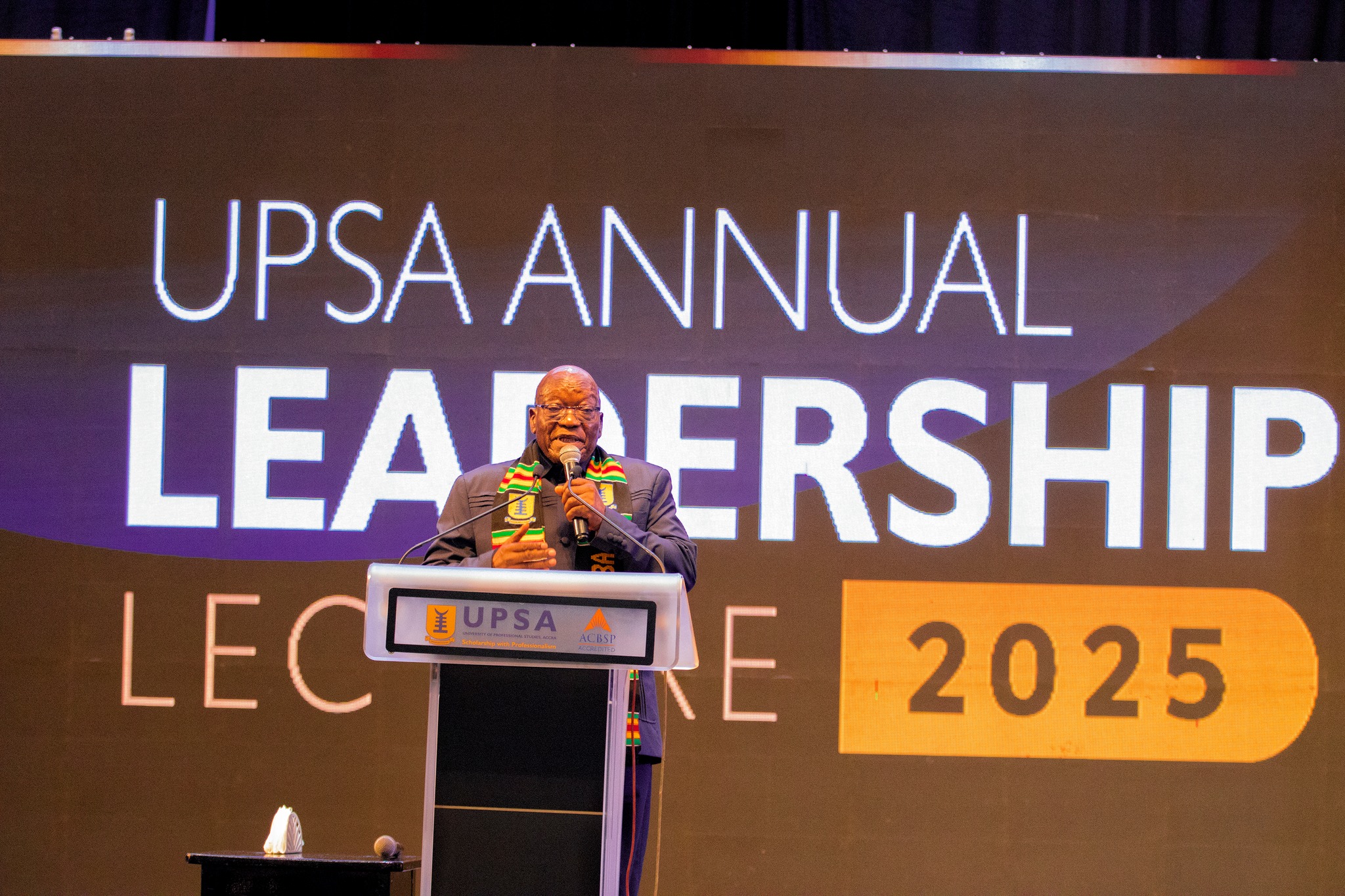
Former South African President Jacob Zuma has urged African nations to unite and embrace the BRICS economic bloc as a pathway to sustainable development and prosperity.
Delivering the keynote address at the 2025 UPSA Annual Leadership Lecture on Tuesday, August 19, Mr. Zuma stressed that Africa’s economic future lies in strengthening its integration and aligning with groupings such as BRICS, which provide an alternative to the dominant global financial order.
“BRICS is the future for Africa,” Mr Zuma said. “It is a critical system in changing the economic fortunes of developing countries. We have modelled our economies to serve other countries, but we have not had any substantial benefits. It is time to look elsewhere.”
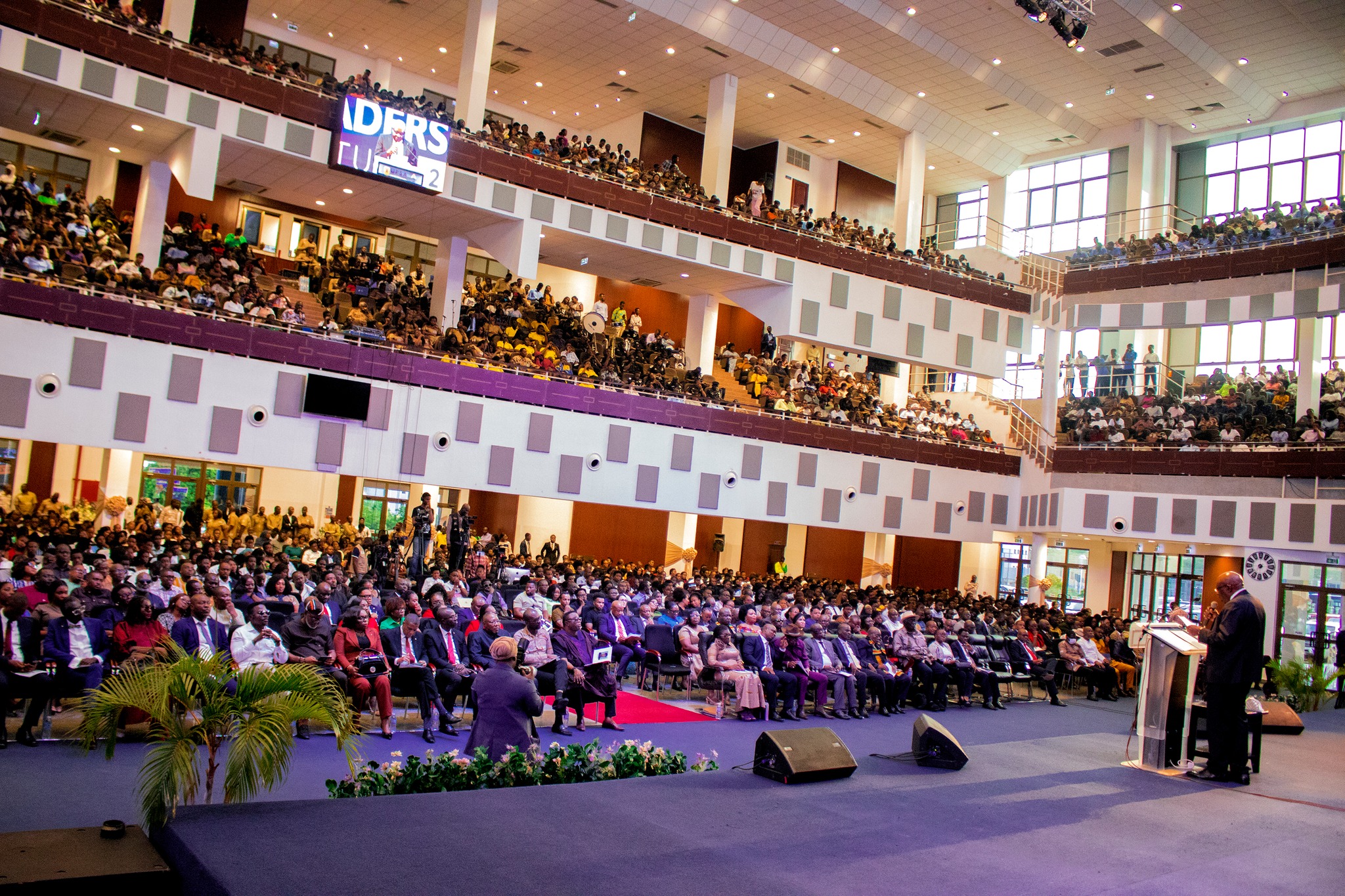
The lecture was held on the theme “The geopolitics and geo-economics of de-dollarisation: BRICS currency strategy, lessons for Africa’s common currency and beyond”.
It highlighted the need for African nations to stand together and resist neocolonial influences that perpetuate dependency and division.
Mr. Zuma, who played a key role in the formation of BRICS during his presidency, recounted the challenges its founders faced, including attempts to undermine their leadership.
He, however, maintained that the bloc (made up of Brazil, Russia, India and South Africa, among others) had become a vital platform for reshaping the global economic order in favour of developing nations.
He lamented Africa’s long history of exploitation by Western powers, noting that despite its vast natural resources, the continent continued to be sidelined in global trade due to structures inherited from the colonial era.
“I do not think there is a continent that has suffered more than Africa,” he said. “The time has come for Africa to stand on its own.”
Mr. Zuma lauded Ghana’s historic role in Africa’s liberation struggle, describing Dr Kwame Nkrumah as a visionary leader who sought the best for the continent.
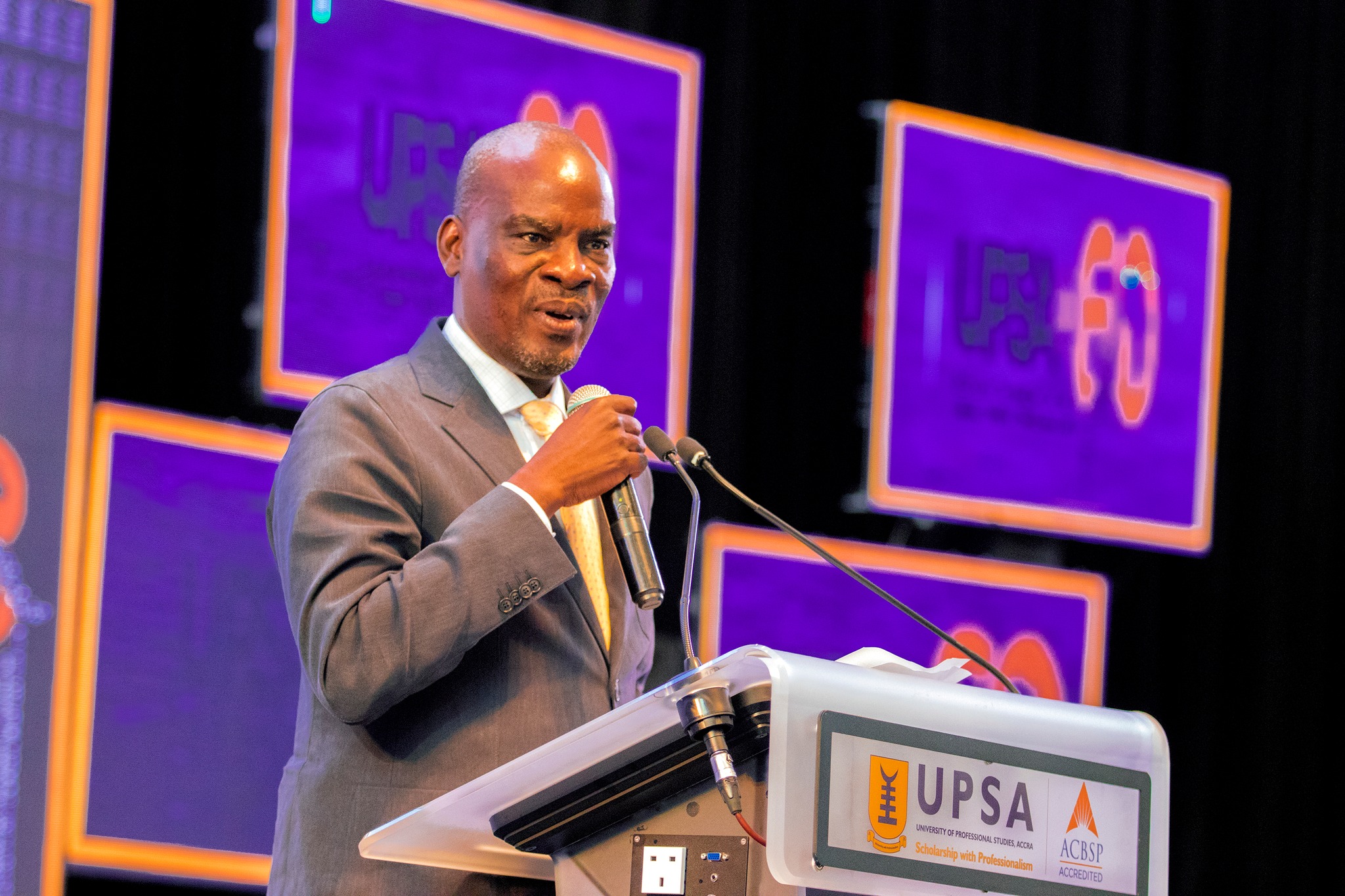
Education Minister, Haruna Iddrisu, commended UPSA for providing a platform for timely discussions on global economic shifts, adding that the lecture had come at a crucial time for Africa’s search for economic independence.
Vice-Chancellor of UPSA, Prof. Kwaku Mensah Mawutor, described the theme of the lecture as both timely and relevant, especially at a period when Africa is grappling with questions of economic sovereignty, regional integration, sustainability, and the search for alternative currency systems.
He explained that the lecture was in line with UPSA’s broader mission of nurturing critical thinkers and thought leaders who can engage with pressing global issues while placing Africa at the centre of the solutions.
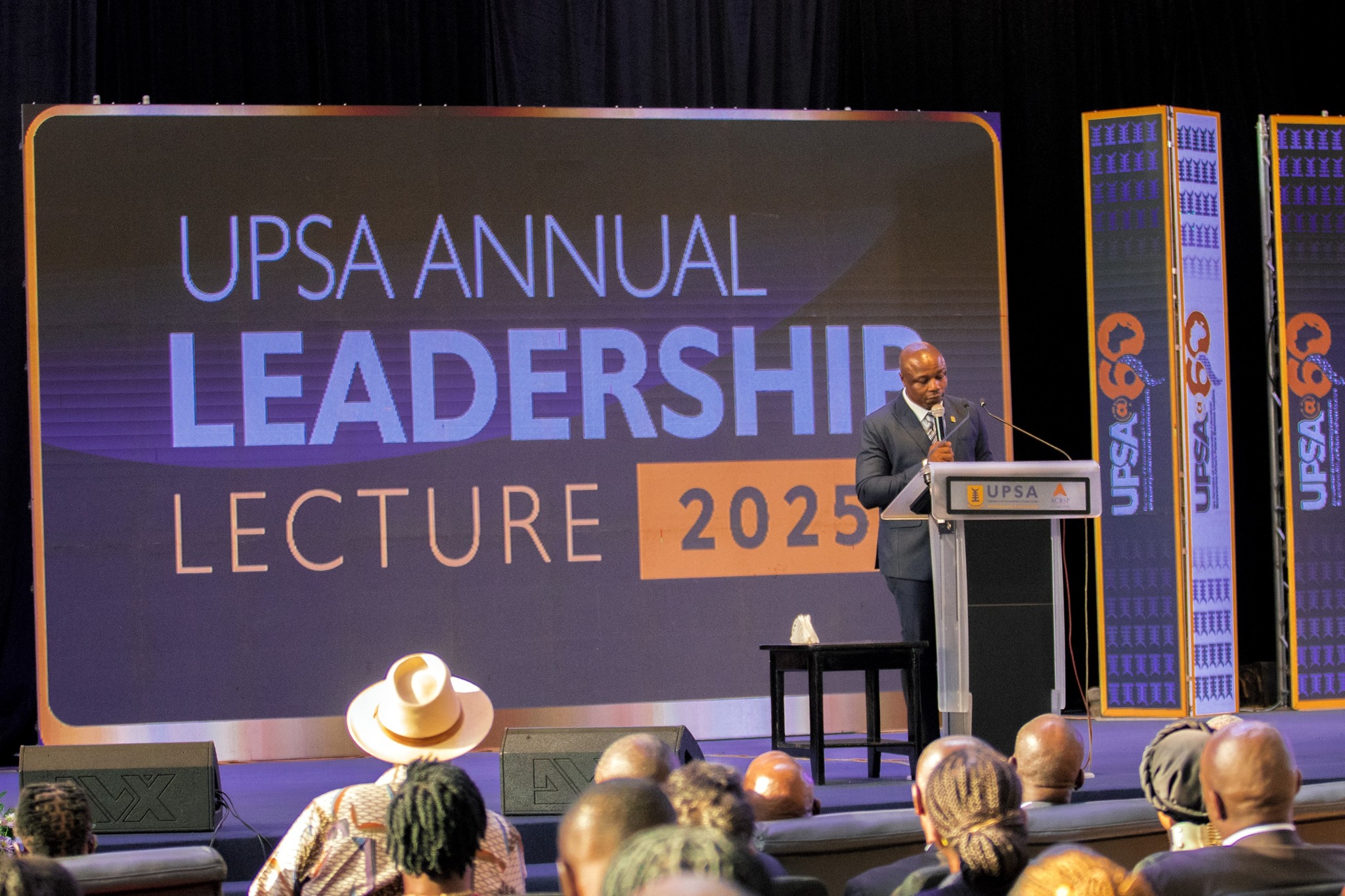
“This lecture is not just an academic exercise,” Prof. Mawutor said. “It is part of our commitment to empower our students, scholars and the wider Ghanaian public to contribute meaningfully to the global discourse and to champion Africa’s voice in shaping its own economic destiny.”
The UPSA Annual Leadership Lecture series was established in 2017 to provide a platform for national and global discussions on challenges and issues that cut across humanity.
Notable speakers in the past include former President Kufuor, Dr Mohammed Ibn Chambas, the Asantehene, Otumfuo Osei Tutu II, Cardinal Peter Kwodwo Turkson, Kwame Pianim and Lord Boateng.