
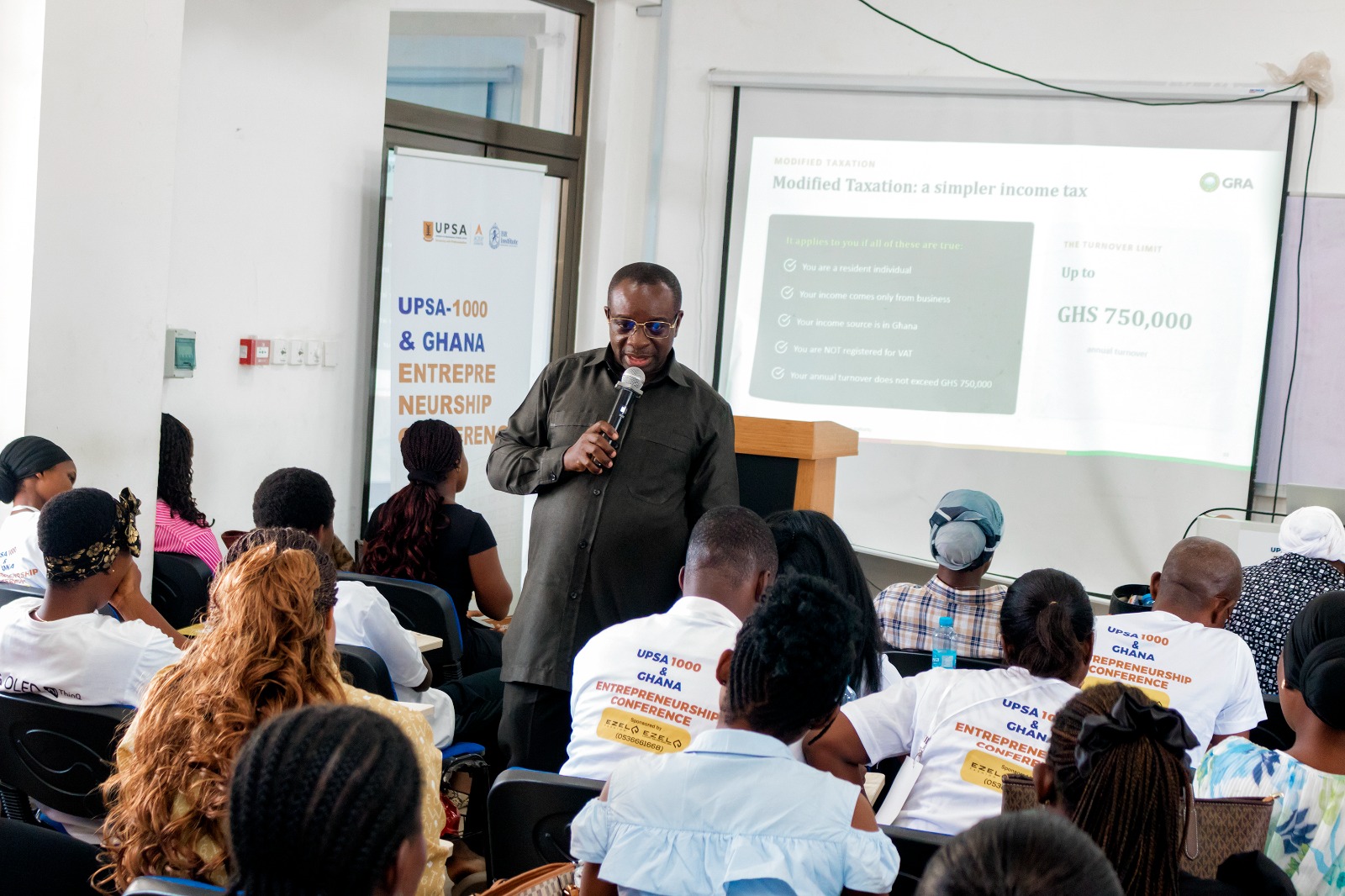
Participants in the UPSA 1000 & Ghana Entrepreneurship Conference have been challenged to move beyond promising ideas and build businesses grounded in customer needs, sound planning and regulatory compliance. The second day of the conference, held on Tuesday, 15 September 2026, focused on converting ideas into viable enterprises through practical instruction and hands-on exercises.
Sessions covered business planning, product development, prototyping, market validation, branding, sustainability, taxation and regulatory compliance. Prof. Anthony Kumasey and Dr Yaa Amponsah Twumasi led discussions on product development and strategic branding, while Dr Samuel Koomson and Dr Eunice Yeboah facilitated the session on business planning and strategy.
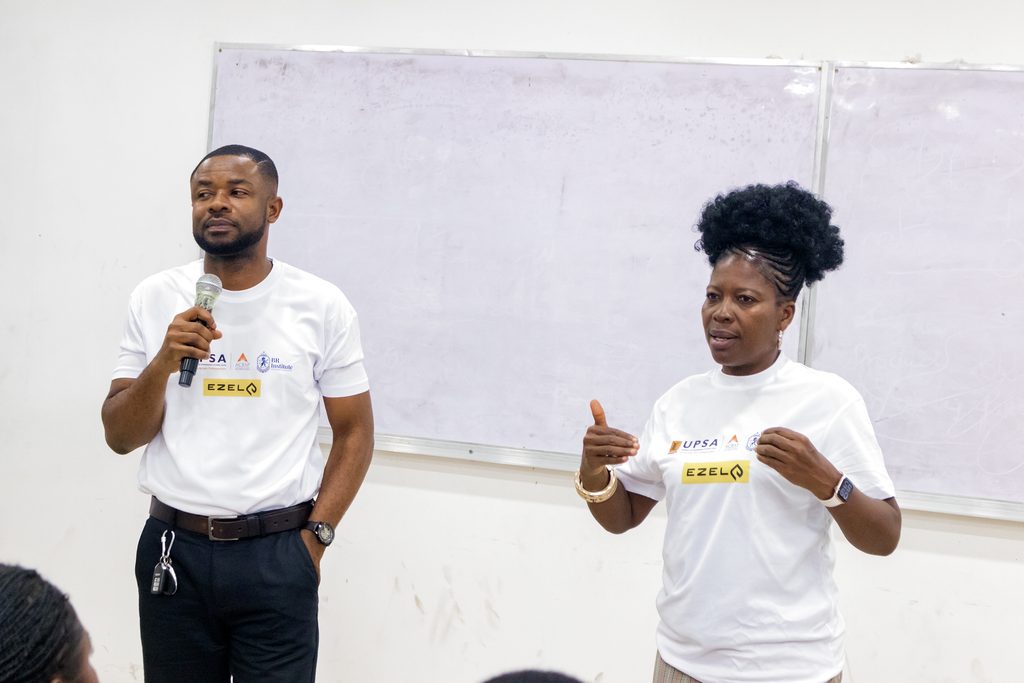
Prof. Esther J.K. Attiogbe addressed product development and business sustainability, while Dr Genevieve Sedalor, a lecturer in the Faculty of Management Studies at UPSA, led a live idea-screening and pitching exercise. Mr Victor Apogo, Chief Revenue Officer of the Ghana Revenue Authority, guided participants through taxation and regulatory compliance.
Participants were encouraged to regard entrepreneurship as a market-oriented activity requiring a clear understanding of customers, competitors and the value a business offers. Using the fruit juice industry as an example, they conducted competitor analyses and identified how weaknesses in existing offerings could create opportunities for differentiation.
The lessons were reinforced by UPSA student entrepreneurs in the beauty, laundry, fashion and food sectors. They shared how social media promotion, lessons from unsuccessful ventures and gaps in competitors’ supply had helped them attract loyal customers. Their experiences demonstrated that enterprises can begin on a modest scale and grow through persistence, responsiveness and a strong understanding of the market.
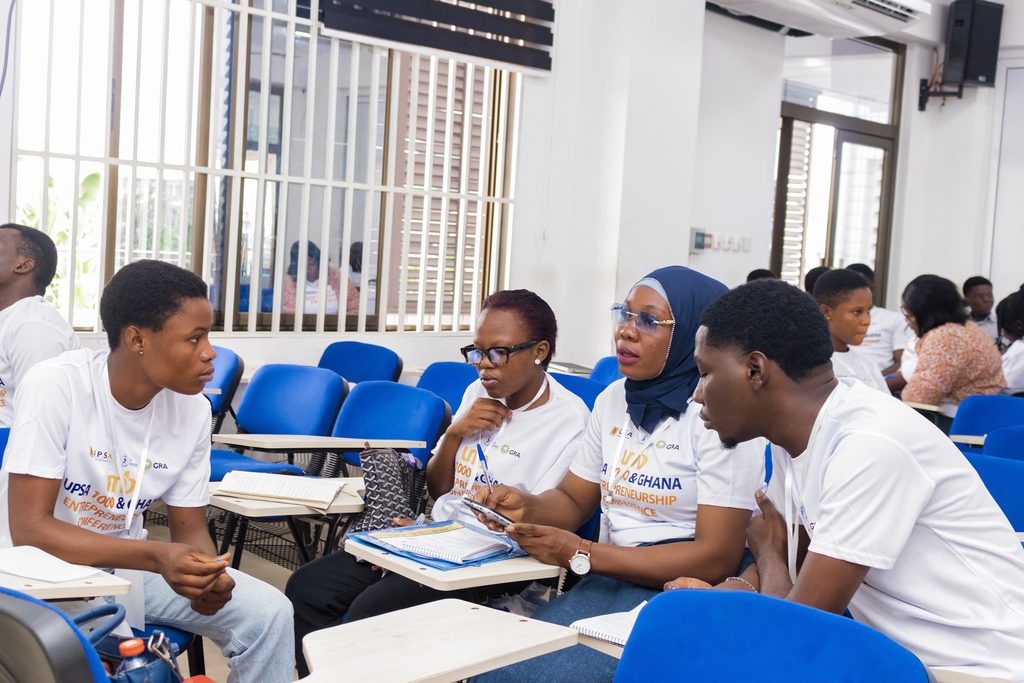
The Business Model Canvas was introduced as a tool for mapping how an enterprise creates, delivers and captures value. Participants were cautioned against developing products solely around personal preferences and reminded that revenue does not translate into profit until operating costs have been considered.
During the pitching exercise, proposals for an all-female car wash, food pre-ordering services and a mobile printing service were assessed for market potential, differentiation and customer trust. Participants also explored low-cost approaches to prototyping, including paper mock-ups, flyers and landing pages. They learned how a Minimum Viable Product could be launched with essential features and refined through customer feedback.
Discussions also examined the distinction between improving an existing product and undertaking New Product Development, which often involves greater uncertainty and risk. Participants were taken through the process from idea generation and screening to prototyping, testing, commercialisation and post-launch improvement, emphasising that product development continues after market entry.
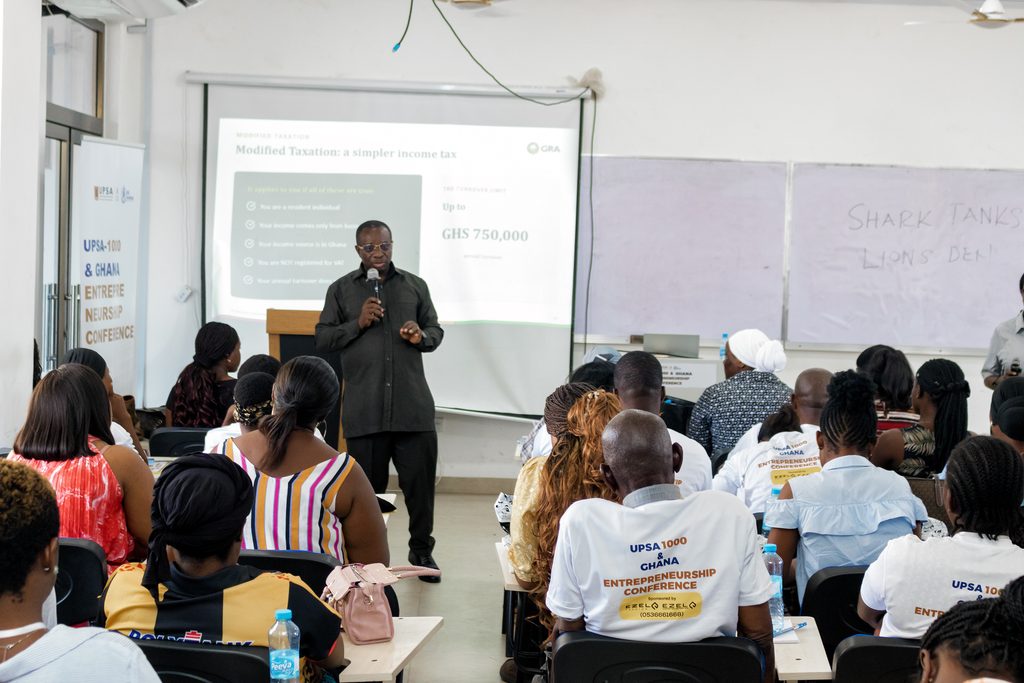
The final session underscored the need to incorporate taxation and regulatory compliance into business operations from the outset. Participants were also introduced to the roles of institutions such as the Food and Drugs Authority, the Ghana Standards Authority and the National Entrepreneurship and Innovation Programme in supporting enterprise development.
The sessions demonstrated that a promising idea is only the beginning. Building a sustainable enterprise requires disciplined planning, continuous testing, sound cost management, customer trust and compliance-competencies central to the UPSA 1000 Enterprise Development Programme’s goal of preparing participants to create value and employment.