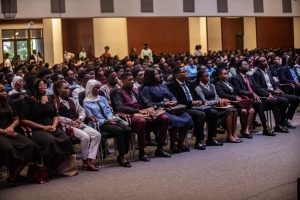
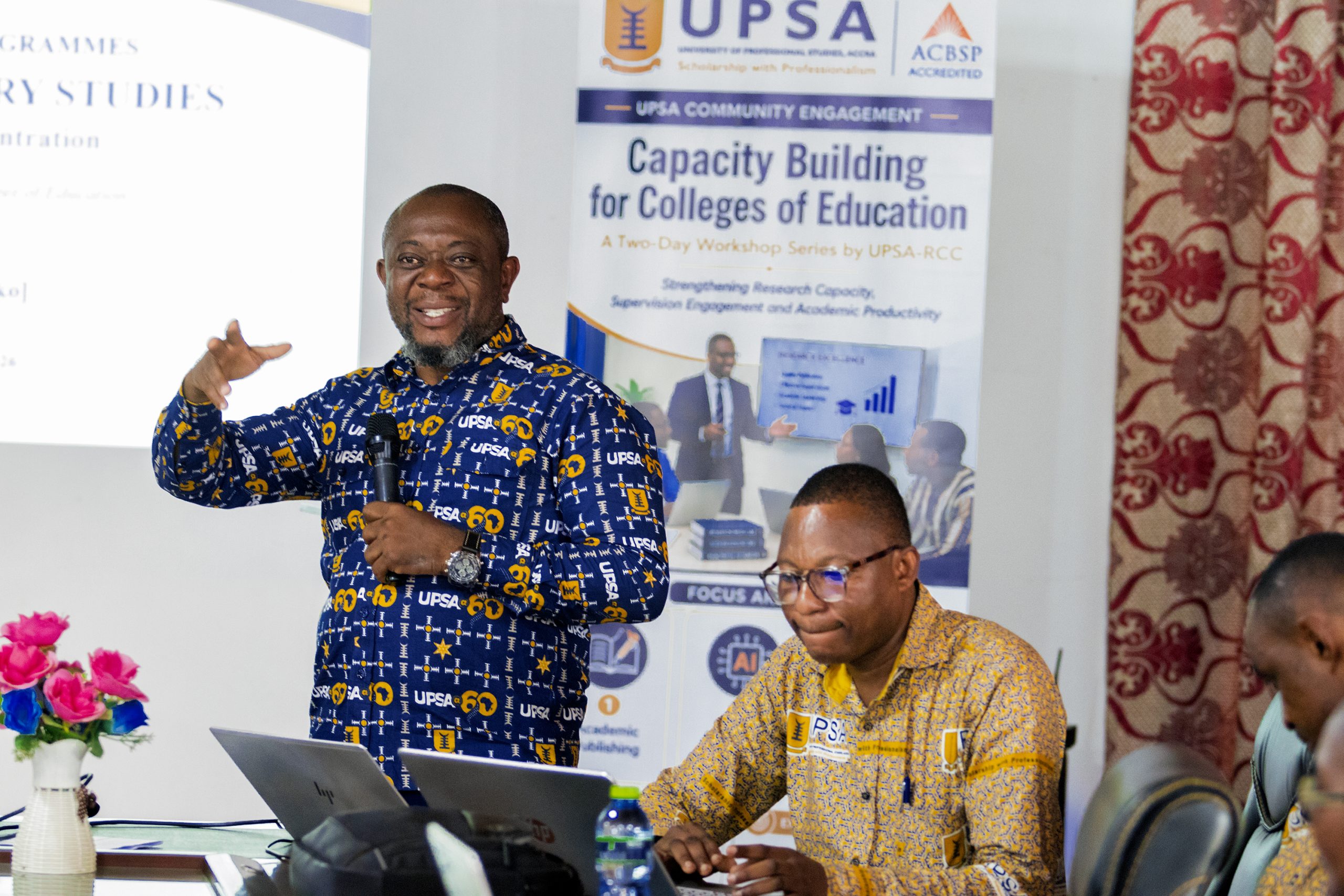
The Research and Consultancy Centre (RCC) of the University of Professional Studies, Accra (UPSA-RCC), has delivered a capacity-building workshop to strengthen research, academic publishing, doctoral preparation and the ethical use of artificial intelligence at the Presbyterian Women’s College of Education, Aburi. The two-day programme, held from Thursday, 23 July to Friday, 24 July 2026, brought together teaching and non-teaching staff, prospective doctoral candidates and researchers seeking to enhance their scholarly and professional competencies.
The workshop was facilitated by Professor Alexander D. K. Preko, Professor Rufai Haruna Kilu, Dr Adam Salifu and Dr Timothy King Avordeh. Through interactive presentations, practical demonstrations and discussions, they guided participants on managing the doctoral journey, building productive relationships with supervisors, developing publishable manuscripts and integrating AI tools responsibly into research and scholarly writing.
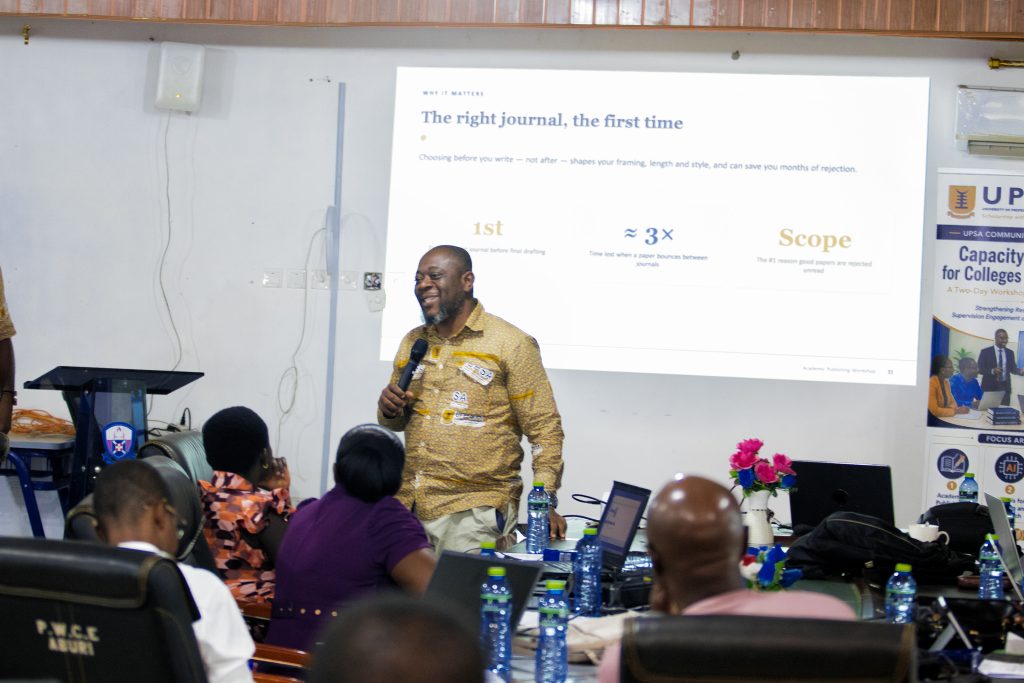
Participants described the session on AI-assisted research and publishing as particularly useful. They gained practical insight into developing precise prompts, evaluating AI-generated information and retaining full responsibility for the accuracy, originality and integrity of their academic work.
The facilitators emphasised that AI should support, rather than replace, the researcher’s intellectual contribution. Participants consequently expressed their intention to apply appropriate AI tools in their research, teaching and publication activities while observing established standards of academic integrity.
The programme also addressed thesis planning, time management, communication with supervisors and the development of structured doctoral research plans. For prospective candidates, the session provided greater clarity on the demands of doctoral education and the practical steps required to begin and complete the journey successfully.
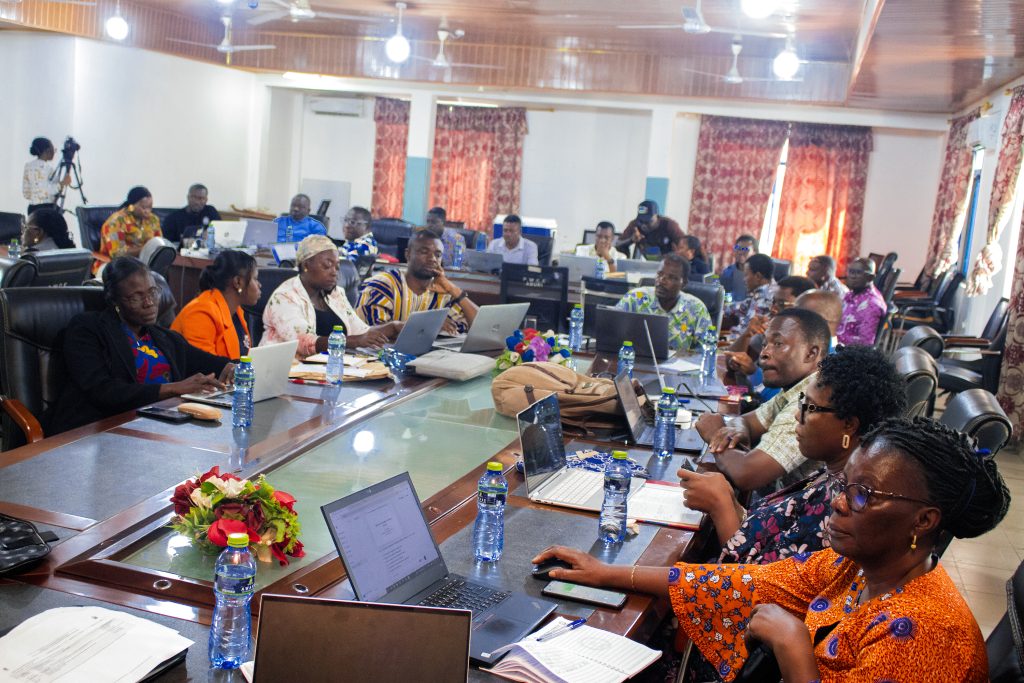
Participants were further introduced to UPSA’s Doctor of Philosophy in Interdisciplinary Studies, including the concentration in Education Studies. The programme combines an intensive face-to-face component with online teaching and learning, providing a flexible pathway for teaching and non-teaching staff of Colleges of Education seeking advanced academic and professional development.
Post-workshop feedback showed strong appreciation for the facilitators’ subject knowledge, clarity, responsiveness and ability to promote active participation. Participants indicated that the content was relevant, appropriately paced and directly applicable to their work.
They called for the initiative to be organised regularly and expanded to include more intensive training in academic publishing, journal selection, review-paper development, international research collaboration, administrative writing, official memorandum preparation and career progression.
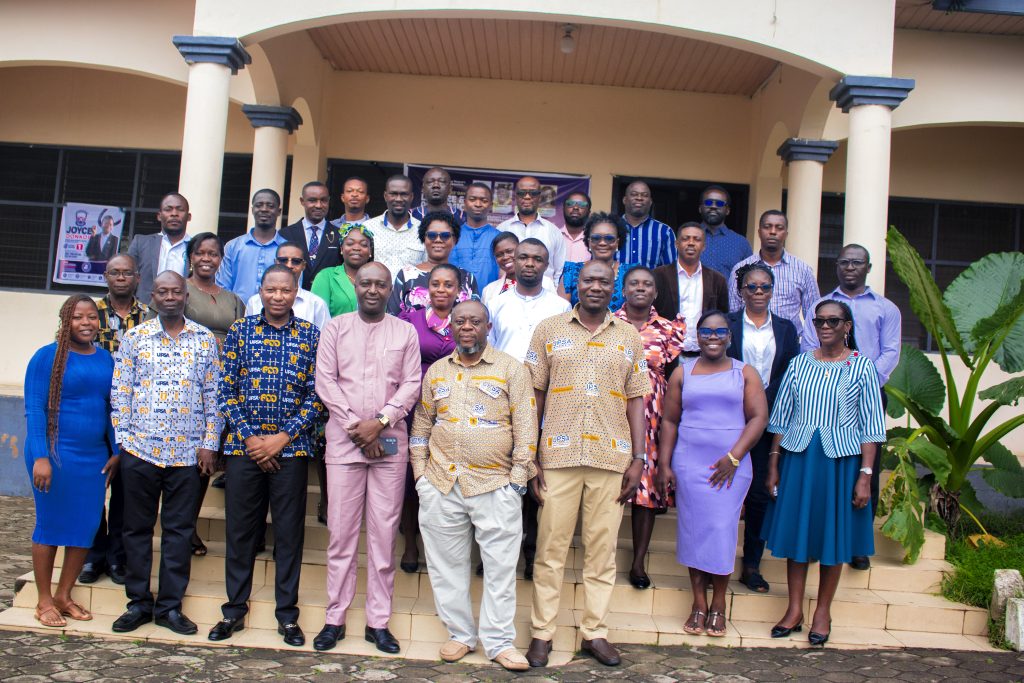
The engagement reinforces UPSA’s commitment to extending its research expertise beyond the University and supporting the development of a stronger research culture within Ghana’s Colleges of Education. Through such initiatives, UPSA-RCC continues to advance quality scholarship, responsible innovation and nationally relevant capacity-building.