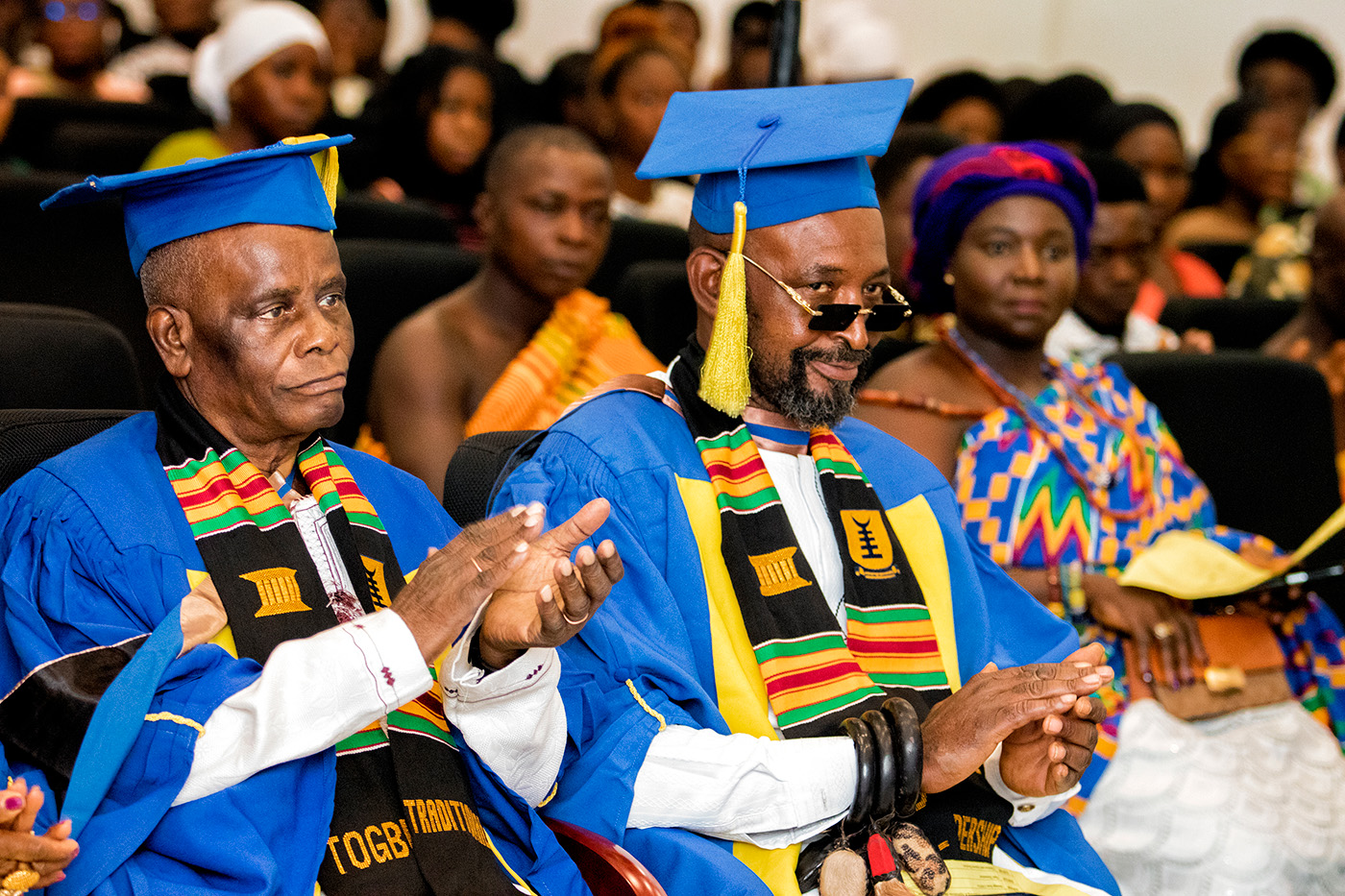
Thirty-five traditional leaders have successfully completed specialised leadership programmes at the Otumfuo Centre for Traditional Leadership (OCTL) of the University of Professional Studies, Accra (UPSA), following a graduation ceremony held on Friday, December 12, 2025, at the West Wing of the Kofi Ohene-Konadu Auditorium.
The graduating cohort comprised chiefs, queen mothers, and administrators drawn from various regions across Ghana. The programme forms part of UPSA’s commitment to strengthening the capacity of traditional institutions to contribute effectively to local governance, development planning, and social cohesion.
The five-day intensive training equipped participants with practical knowledge and contemporary leadership skills, focusing on areas critical to traditional administration and community development. Key modules covered leadership and management, effective land administration, conflict resolution, negotiation for development, and records management and documentation.
Participants underwent rigorous academic and practical sessions, with a number of them successfully meeting the requirements for the award of diploma certificates under their respective programmes.
Delivering remarks on behalf of the Vice-Chancellor, the Pro Vice-Chancellor of UPSA congratulated the graduates and encouraged them to apply the knowledge and skills acquired to make a meaningful impact within their communities.
He reaffirmed the University’s commitment to the advancement of the chieftaincy institution, noting that UPSA continues to design innovative programmes and undertake applied research, often in collaboration with partners such as the United Nations Population Fund (UNFPA), to support community development initiatives across the country.
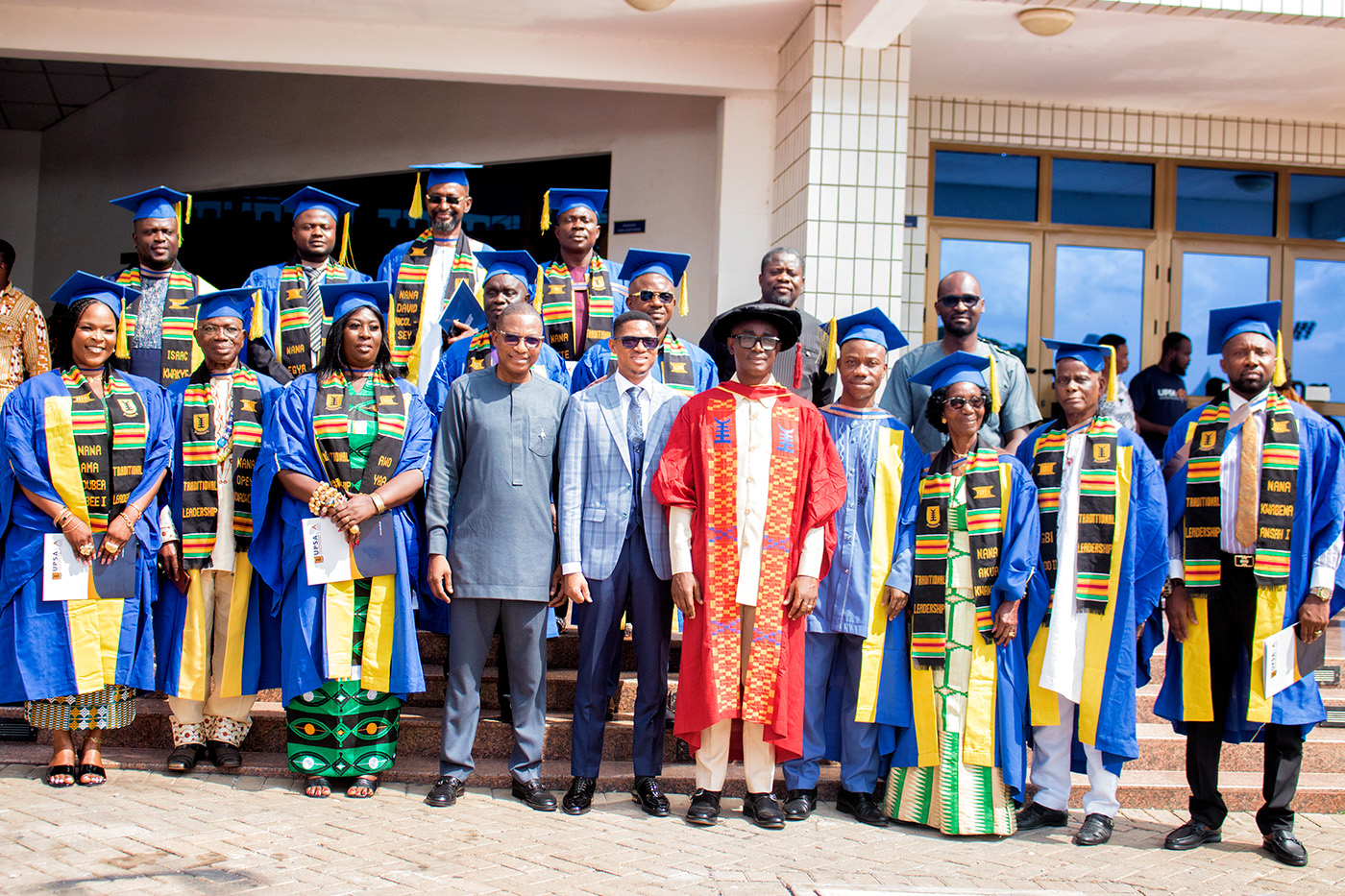
The Acting Director of the Otumfuo Centre for Traditional Leadership, Dr. Gerald Nyanyofio, highlighted the Centre’s growing national impact, indicating that since its establishment, OCTL has trained over 100 chiefs, queen mothers, and staff of traditional councils and houses of chiefs nationwide.
He emphasised the indispensable role of traditional leaders in Ghana’s democratic governance and socio-economic development, stressing that sustainable national development requires strong collaboration between traditional authorities and formal political institutions.
According to him, without such synergy, Ghana’s development aspirations would remain unattainable.
On behalf of the graduating class, participants expressed appreciation to UPSA for the opportunity to enhance their leadership capacity and pledged to apply their training in service of their communities. They further committed to encouraging other traditional leaders to enrol in future programmes offered by the Centre.