

The University of Professional Studies, Accra (UPSA) has launched a new initiative aimed at nurturing and training 1,000 young aspiring entrepreneurs into future-ready business leaders for Ghana and the global marketplace.
Spearheaded by the Faculty of Management Studies, the ‘UPSA-1000 Project,’ seeks to equip selected students and young professionals with essential entrepreneurial knowledge and skills at no cost to participants.
The project will guide the beneficiaries through business planning, product development, branding, financial literacy, digital marketing, mentorship, and networking opportunities.
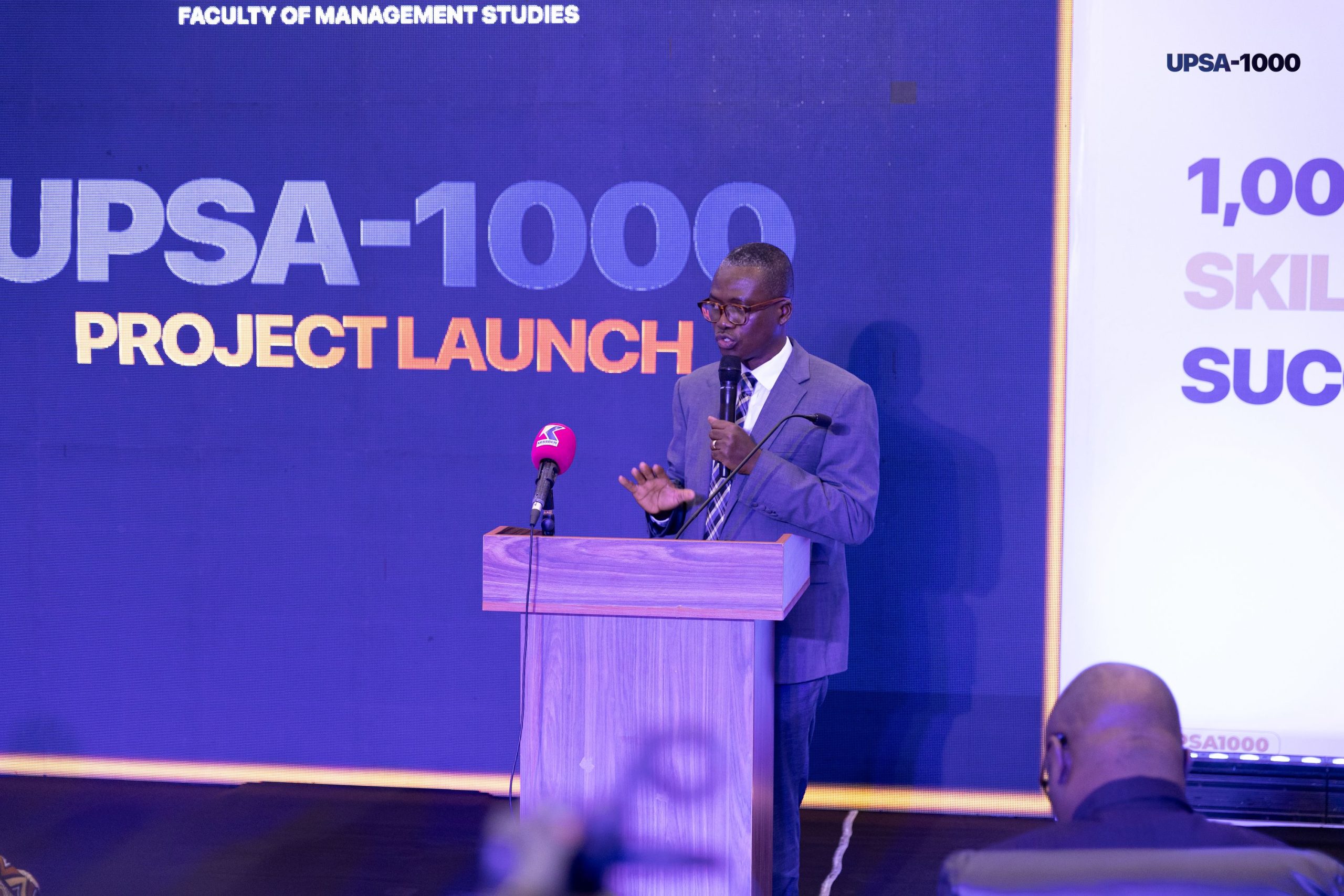
Speaking at the launch, Dr. Ernest Mensah Abraham, Dean of the Faculty of Management Studies, said the project is structured to build a strong leadership pipeline by identifying and developing high-potential individuals through intensive mentorship, business exposure, and personal development.
“This is not just another training programme, but a transformative initiative designed to nurture young people who possess passion, drive, and a spirit of enterprise,” he stated.

The Vice-Chancellor of UPSA, Prof John Kwaku Mensah Mawutor in an address delivered on his behalf by Prof. Fidelis Quansah, Director of the Institute of Professional Studies (IPS), described the project as a “transformative initiative that underscores UPSA’s commitment to nurturing entrepreneurial talent and preparing youth for meaningful impact.”
“We are not just training 1,000 youth,” the VC added, “but empowering the next generation of business leaders and job creators. This aligns strongly with the government’s youth empowerment agenda.”
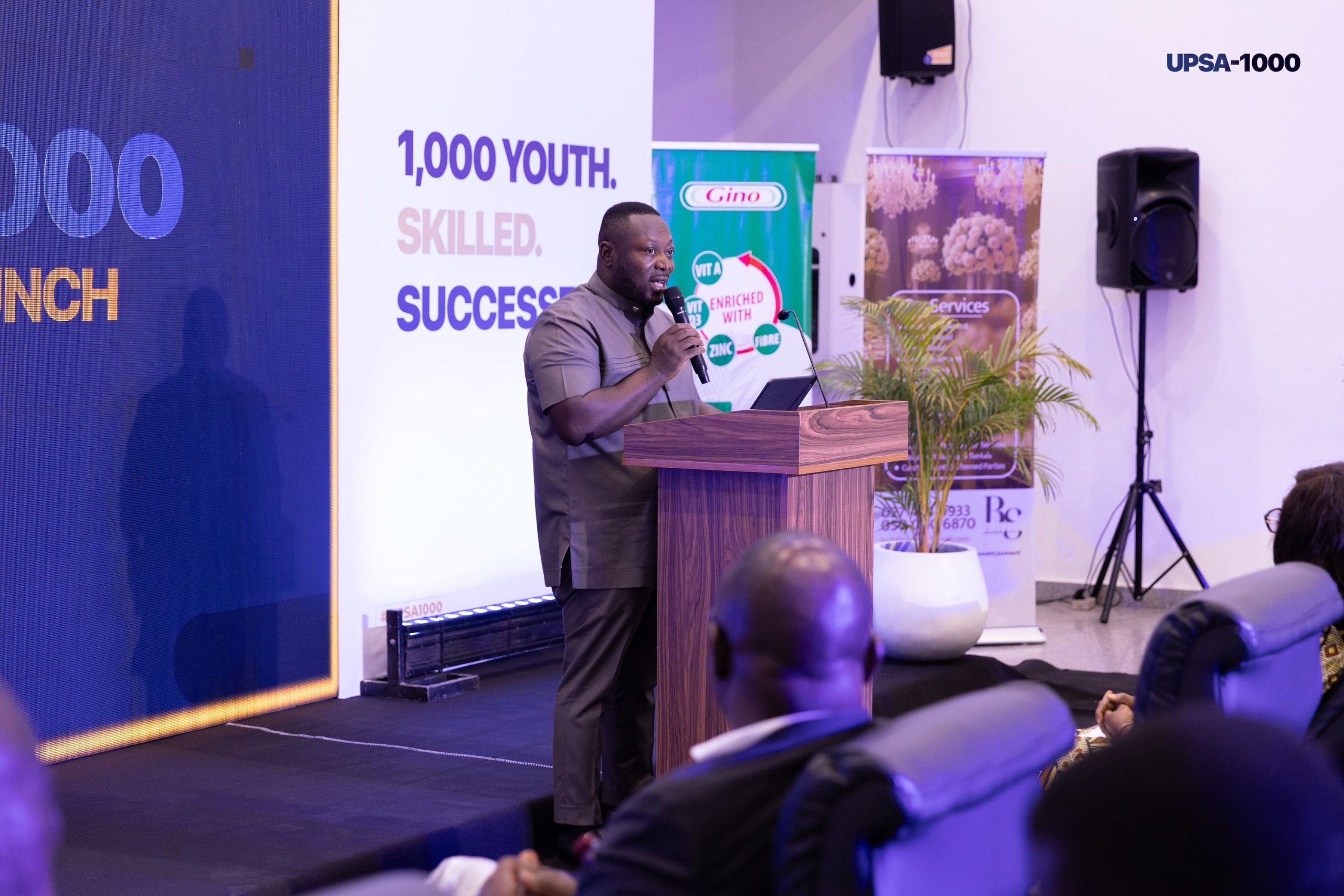
For his part, the Minister for Youth Development and Empowerment, Mr George Opare Addo, commended UPSA for what he termed “a bold initiative” that goes beyond classroom learning.
“This is more than a training programme; it is about building a nation through empowering young minds,” Mr Opare-Addo noted.
He disclosed that the government has already committed GHS100 million under the National Entrepreneurship and Innovation Programme (NEIP) and Adwumawura Project to develop youth capacity, adding that initiatives like the UPSA-1000 project are complementary in reigniting the spirit of entrepreneurship among Ghana’s youth.

Dr. Juliana Akushika Andoh, a lecturer at UPSA and a key member of the organising team, used the occasion to call on corporate Ghana to support the initiative.
“We welcome partnerships in the form of mentoring, sponsorship, or content co-creation to support the development of the UPSA-1000 cohort,” she said.
The programme is open to students and young professionals who demonstrate leadership potential, a commitment to ethical business practices, and a passion for creating impact in their communities.